

Yellow and blue living room ideas offer the perfect balance of warmth, freshness, and timeless style. Yellow brings sunshine and energy into a space, while blue creates a calming atmosphere that makes a living room feel comfortable and inviting. Together, these colors can transform everything from a small apartment living room to a spacious family home.
Whether you prefer a modern blue sofa with mustard-yellow accents, a relaxed coastal interior, or a colorful living room filled with patterns and textures, there are plenty of ways to make this combination work. In this guide, discover 13 yellow and blue living room decor ideas for 2026, along with practical styling tips to help you create a beautiful, balanced space.
1. Maximize Natural Light in Yellow and Blue Living Rooms
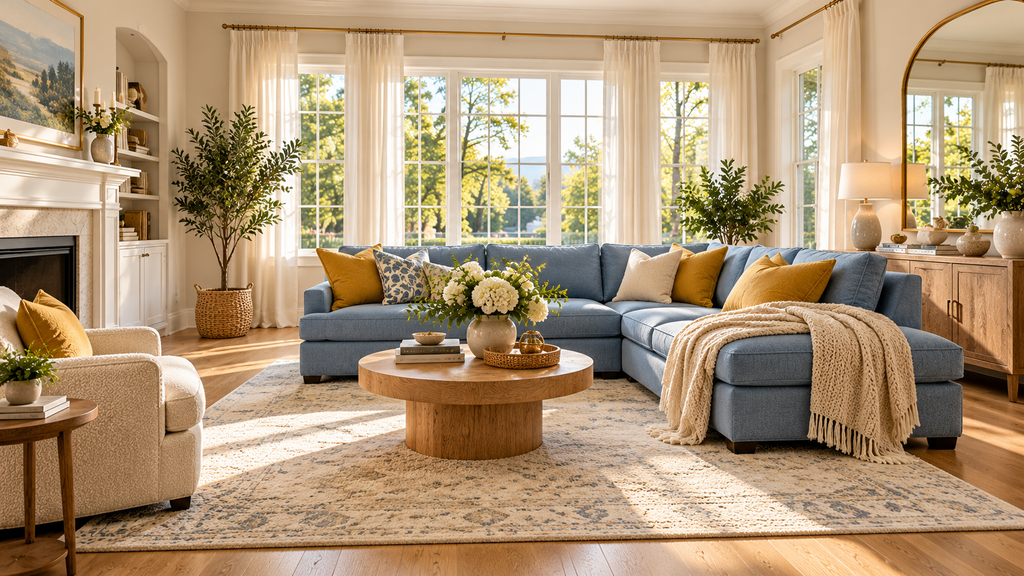
Natural light can make a yellow and blue living room feel brighter, more spacious, and more welcoming. Sunlight enhances yellow’s cheerful appearance while bringing out the different undertones in blue walls, upholstery, and decorative accessories.
Start with sheer white curtains that allow daylight to enter without sacrificing privacy. Position mirrors opposite or beside windows to reflect available light throughout the room. If your living room receives limited sunlight, choose pale blue walls, buttery-yellow accents, and light-colored flooring to keep the space from feeling too dark.
A blue sofa paired with yellow cushions and a cream rug creates a fresh, balanced look. Keep window areas relatively uncluttered so the room feels open and airy.
2. Incorporate Modern Geometric Patterns
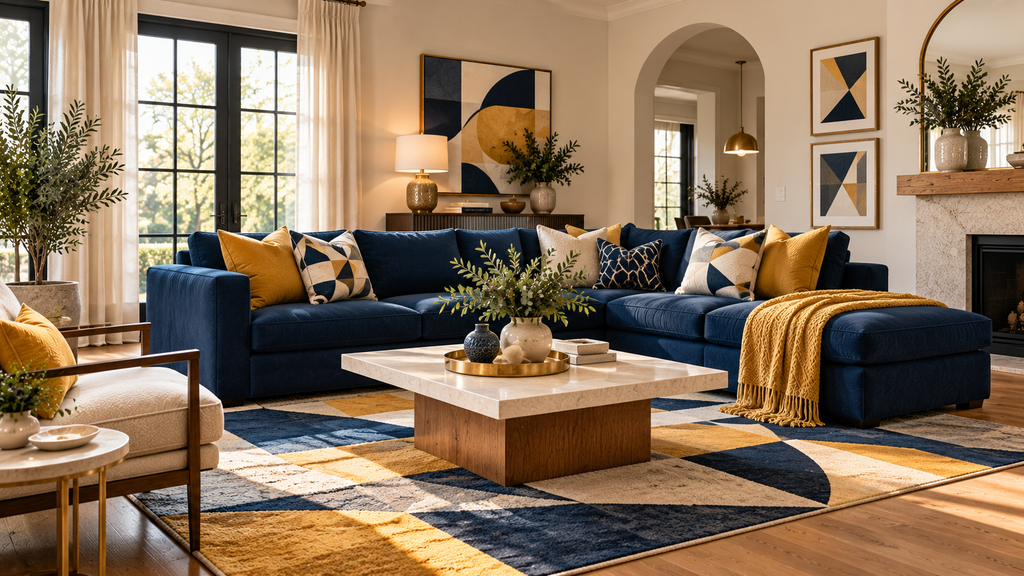
Geometric patterns are an excellent way to introduce personality into a yellow and blue living room without changing the entire color scheme. Triangles, abstract shapes, stripes, and chevrons can give a contemporary interior a lively appearance.
If you prefer a subtle approach, choose a geometric cushion or a small decorative vase. For a stronger statement, introduce a blue and yellow area rug beneath a neutral coffee table. Patterned wallpaper can also work well on one accent wall, especially when the remaining walls and furniture are relatively simple.
The key is to balance bold patterns with solid colors. For example, a navy-blue sofa looks attractive with a geometric yellow cushion and a rug that repeats both shades. This creates visual harmony while keeping the room comfortable rather than overwhelming.
3. Balance Bold Yellow Accents with Soft Blue Tones
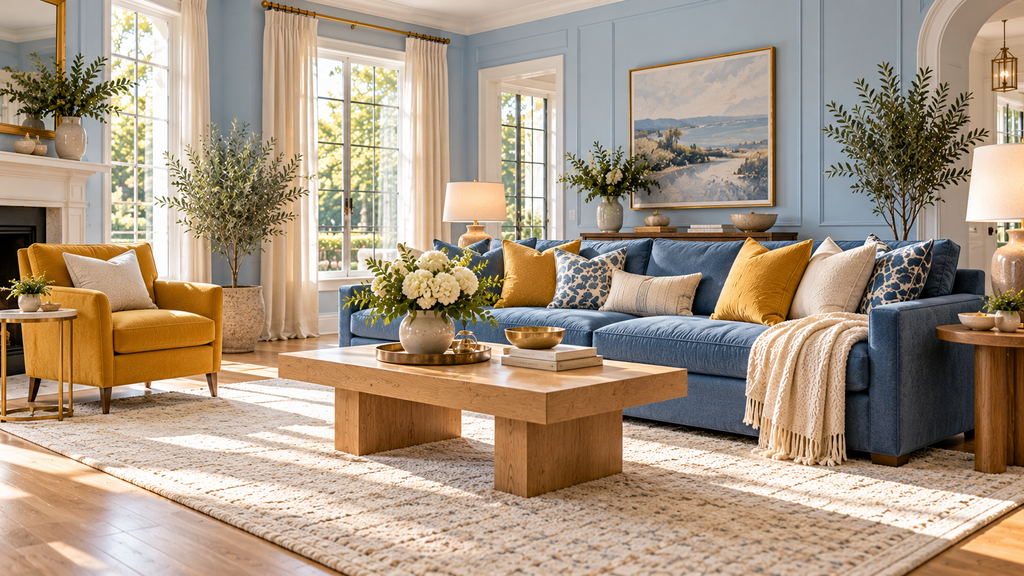
One of the easiest ways to decorate with yellow and blue is to let one color dominate while using the other as an accent. Soft blue creates a peaceful foundation, while brighter yellow adds energy and visual interest.
Consider painting the walls powder blue or choosing a light-blue sofa. Then introduce yellow through cushions, lampshades, a throw blanket, or a statement armchair. If you prefer darker blues, mustard yellow can soften the richness of navy and create a more sophisticated atmosphere.
Cream, beige, and natural wood help connect the two colors. These neutral shades prevent the room from appearing too busy and allow individual decor pieces to stand out.
For a cohesive result, repeat each color in at least two places. Yellow cushions, for example, can coordinate with a yellow ceramic vase or a small piece of artwork.
4. Use Textured Fabrics to Create a Cozy Atmosphere
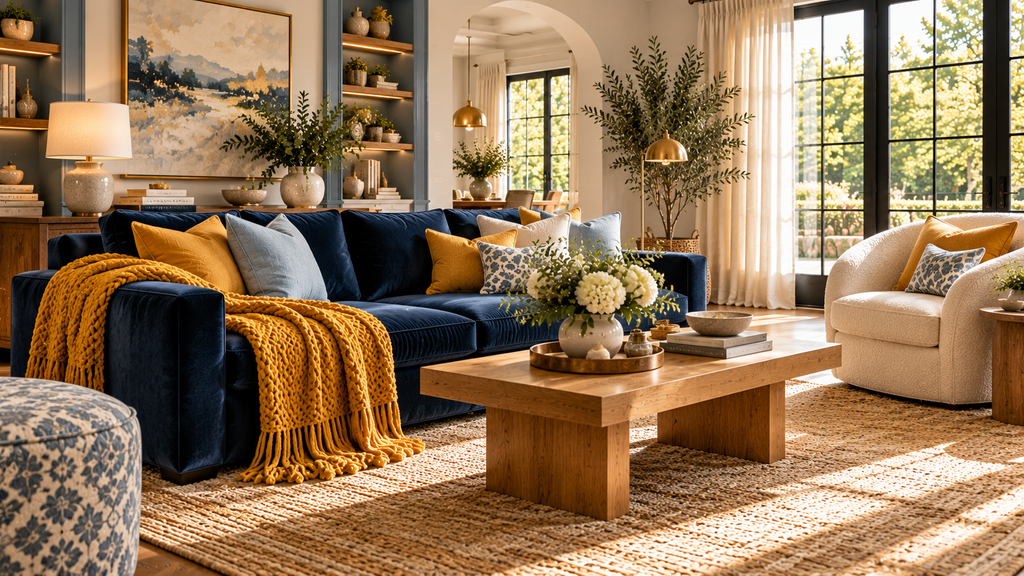
Color is important, but texture is what makes a living room feel layered and comfortable. Combining velvet, linen, wool, cotton, and woven materials can make a blue and yellow color scheme feel richer without adding more colors.
A navy velvet sofa provides a luxurious foundation, while a chunky mustard-yellow throw adds warmth. Linen cushions in pale blue or cream create a relaxed contrast, and a textured rug helps define the seating area.
You can also introduce texture through boucle accent chairs, woven baskets, knitted blankets, and natural wood furniture. These materials are especially effective in modern living rooms that might otherwise feel too plain.
For a balanced look, mix smooth and soft surfaces rather than using the same fabric everywhere. This creates depth while keeping the room practical for everyday relaxation.
5. Create a Coastal Vibe with Blue and Yellow
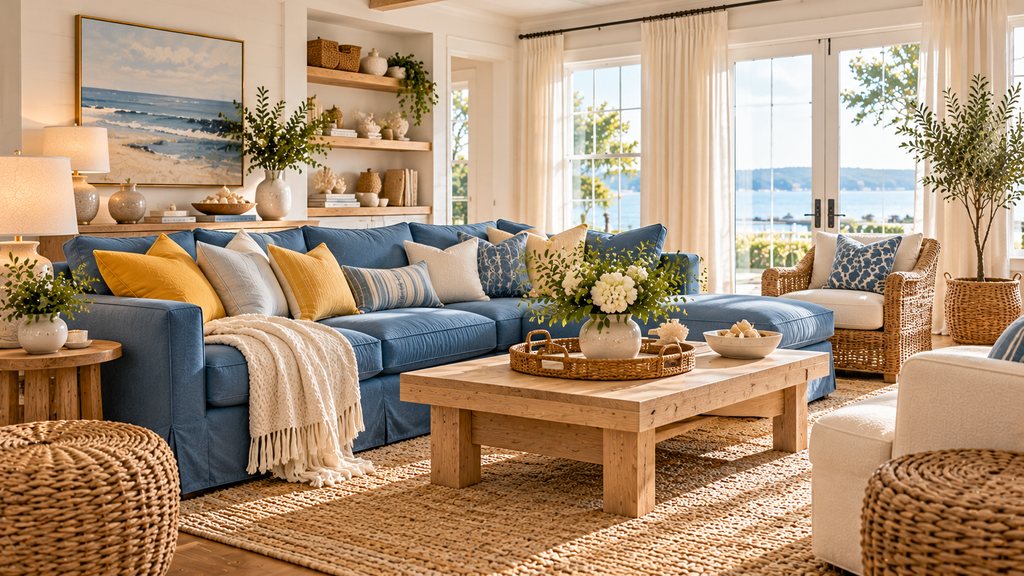
Blue and yellow are ideal for coastal-inspired living rooms because they recall ocean water, sandy beaches, and sunny seaside afternoons. This combination works particularly well with white walls, natural textures, and relaxed furniture.
Choose ocean blue or soft sky blue for the main seating, then add sandy-yellow cushions or a pale golden throw. A jute rug, wicker baskets, light wood furniture, and linen curtains reinforce the natural coastal feeling.
Avoid using too many nautical decorations if you want a contemporary result. Instead of filling the room with anchors and seashells, focus on a few carefully selected accessories and a fresh, uncluttered layout.
This style suits both coastal homes and ordinary suburban living rooms. Even a small space can feel breezy and bright with a blue sofa, warm yellow accents, and natural materials.
6. Mix Vintage Elements with Modern Blue and Yellow Decor
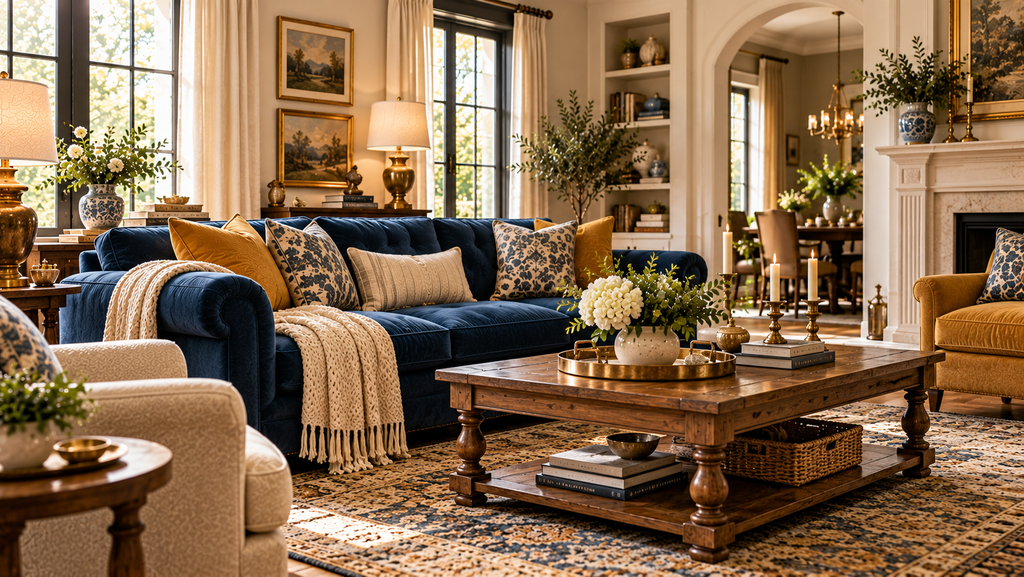
Vintage furniture can give a yellow and blue living room character that feels personal rather than overly coordinated. Antique frames, classic table lamps, retro side tables, and traditional rugs work beautifully with modern sofas and contemporary accessories.
Try pairing a deep-blue sofa with muted golden-yellow cushions and a vintage wooden coffee table. Brass lamps and aged picture frames add warmth, while simple curtains and uncluttered surfaces keep the room looking current.
You do not need to fill the entire room with antiques. A few distinctive pieces can create an interesting contrast between old and new. For example, a traditional patterned rug can make a streamlined blue sofa feel more inviting.
This approach is ideal if you appreciate timeless interiors that can evolve with changing decor preferences.
7. Choose the Right Yellow Shade for Your Lighting
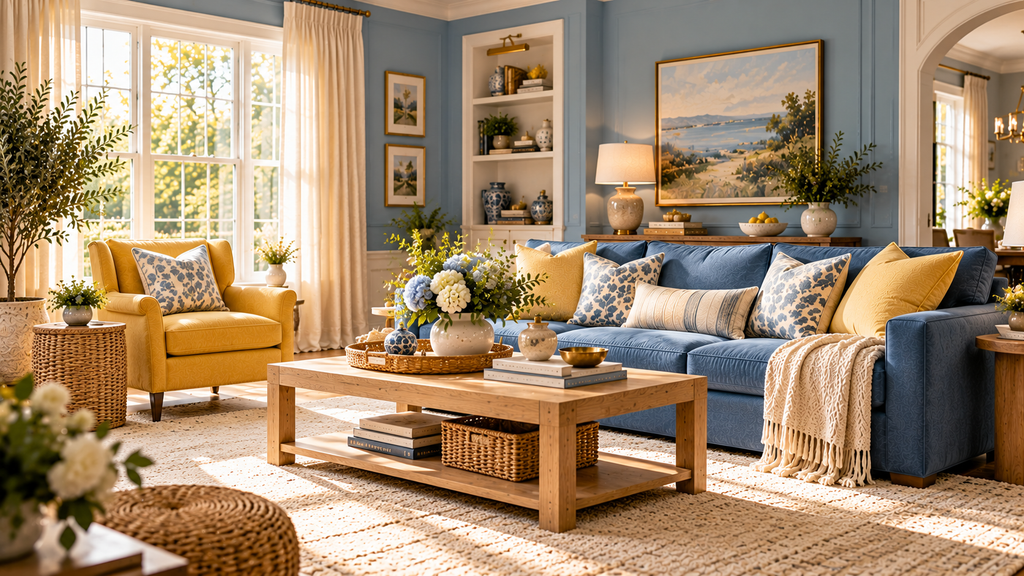
Not every yellow looks the same in every room. Natural daylight, artificial lighting, wall color, and flooring can all influence how yellow appears. Choosing the right shade is therefore an important part of designing a harmonious blue and yellow living room.
Butter yellow and soft pastel yellow work well in calm, light-filled spaces. Mustard and golden yellow bring warmth to rooms with darker blue furniture. Brighter lemon yellow can create a playful contemporary accent, especially when used in small amounts.
Before painting a wall or purchasing a large furniture piece, test color samples in different areas of the room. Observe them in the morning, afternoon, and evening to see how the tones change.
If your living room has limited natural light, combine warm yellow accents with lighter blues and cream finishes. In a sunny room, deeper blue elements can provide contrast without making the interior feel heavy.
8. Layer Different Shades of Blue
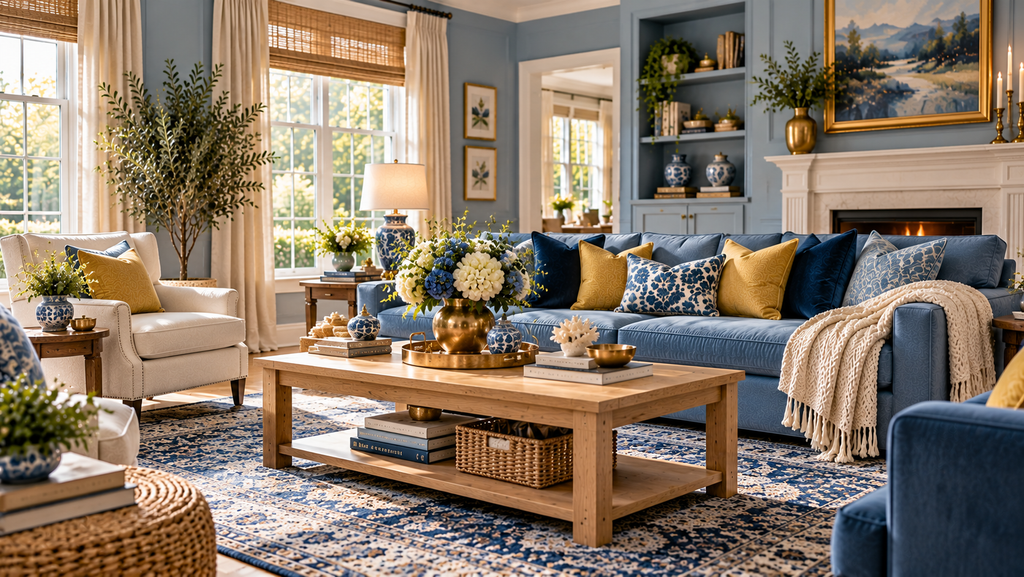
Using multiple shades of blue creates depth and prevents a living room from feeling flat. Powder blue, denim, slate, teal-blue, and navy can work together when their proportions are carefully balanced.
For example, start with pale-blue walls, add a medium-blue sofa, and introduce navy cushions or a darker blue rug. Mustard-yellow accessories then provide a warm contrast that draws attention to the seating area.
To avoid a mismatched appearance, repeat selected shades throughout the room. A navy cushion can coordinate with a dark picture frame, while a lighter blue vase can echo the wall color.
Layering blue tones is particularly useful when you want a sophisticated interior but still want to include cheerful yellow accents. The result can feel both relaxing and visually interesting.
9. Add Metallic Accents for an Elegant Finish
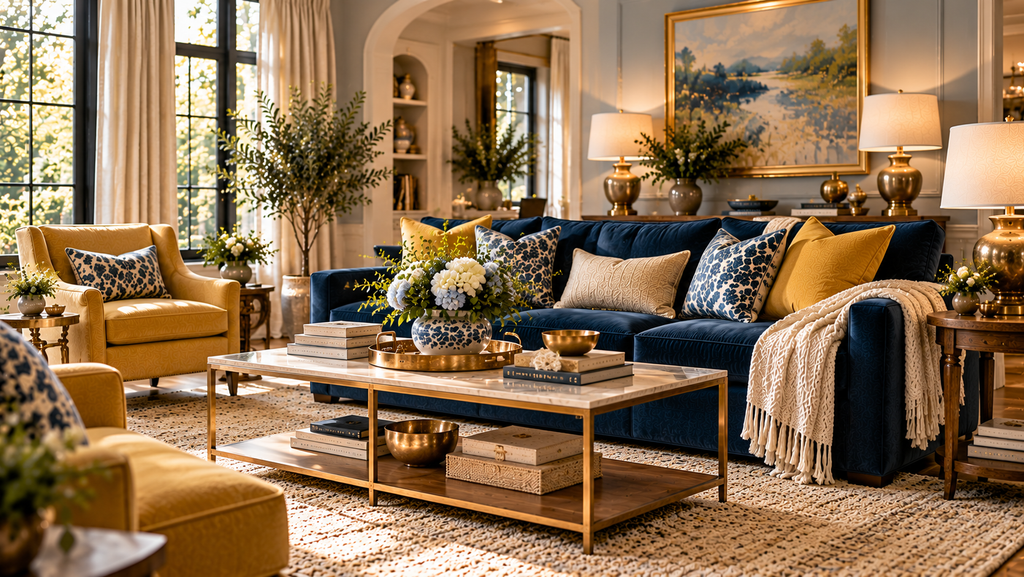
Metallic details can elevate a yellow and blue living room by adding subtle shine and refinement. Brass, brushed gold, and champagne-colored finishes complement yellow’s warmth, while chrome and silver can create a cooler, more contemporary effect.
A brass floor lamp beside a navy sofa is a simple way to introduce this detail. You could also choose gold picture frames, a metallic side table, or a coffee table with slim brass legs. These elements work especially well when the room already includes mustard-yellow cushions or golden decorative accessories.
The goal is to use metallic finishes selectively. Too many shiny surfaces can distract from the main color palette, while a few coordinated pieces create a polished look.
Pair metallic accents with matte walls, soft textiles, and natural wood to maintain a comfortable atmosphere.
10. Design a Family-Friendly Yellow and Blue Living Space
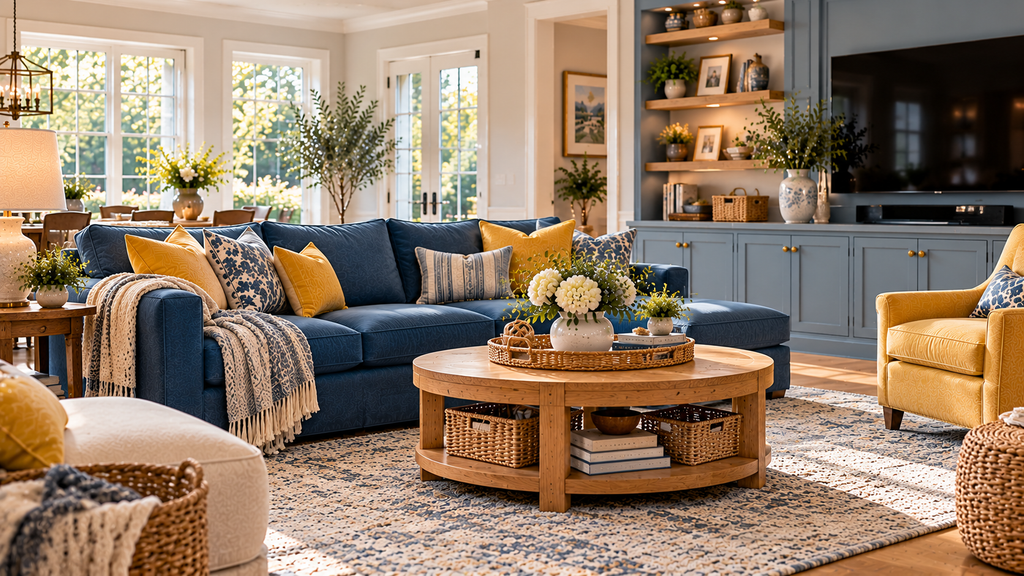
A beautiful living room should also support everyday life. If your household includes children, pets, or frequent guests, choose furnishings and finishes that are easy to maintain.
A durable blue sofa can help disguise minor everyday marks better than very pale upholstery, although fabric performance depends on the material and finish. Add washable yellow cushion covers, a practical low-pile rug, and a coffee table with rounded edges.
Storage is equally important. Woven baskets, closed cabinets, and storage ottomans provide places for toys, blankets, books, and everyday accessories. This helps maintain a tidy appearance without sacrificing comfort.
For a family-friendly color scheme, choose shades that can be repeated across different items as your needs change. Blue seating and yellow accents are easy to refresh with new cushion covers or seasonal decor.
11. Bring the Color Scheme to Life with Green Plants
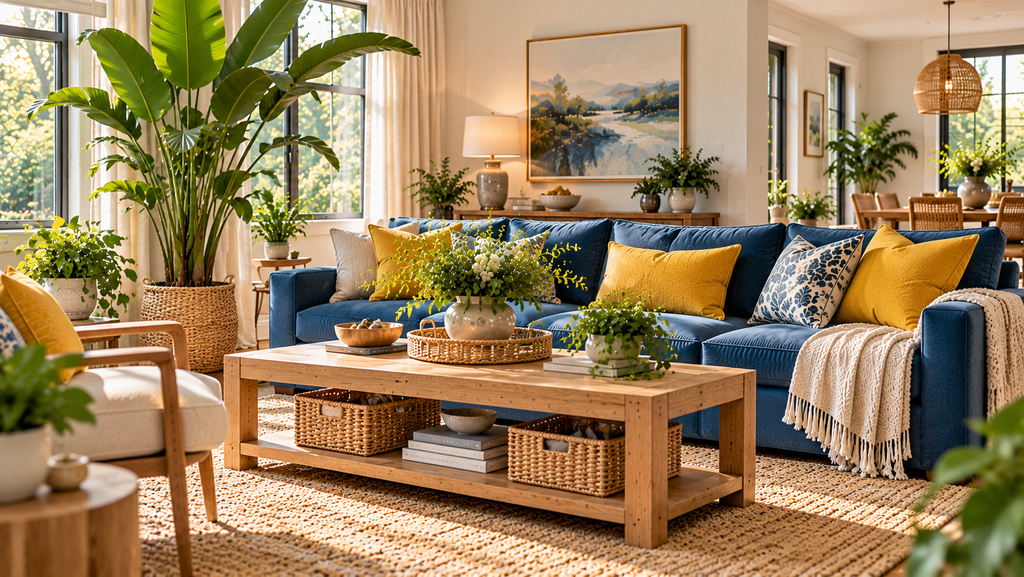
Indoor plants introduce a natural third color that works beautifully with yellow and blue. Green foliage softens the contrast between the two main shades and makes a living room feel more connected to nature.
Place a tall fiddle-leaf fig or another suitable indoor tree near a bright window. Smaller plants can sit on shelves, side tables, or plant stands. If you prefer low-maintenance greenery, choose varieties suited to your room’s available light and care routine.
Blue upholstery and yellow cushions create a colorful foundation, while green leaves add freshness and organic texture. Terracotta pots, woven planters, and wooden stands help connect the plants to the rest of the decor.
Avoid overcrowding the room with greenery. A few well-placed plants can create a stronger visual effect than too many small pots scattered around the space.
12. Choose Artwork That Connects Yellow and Blue
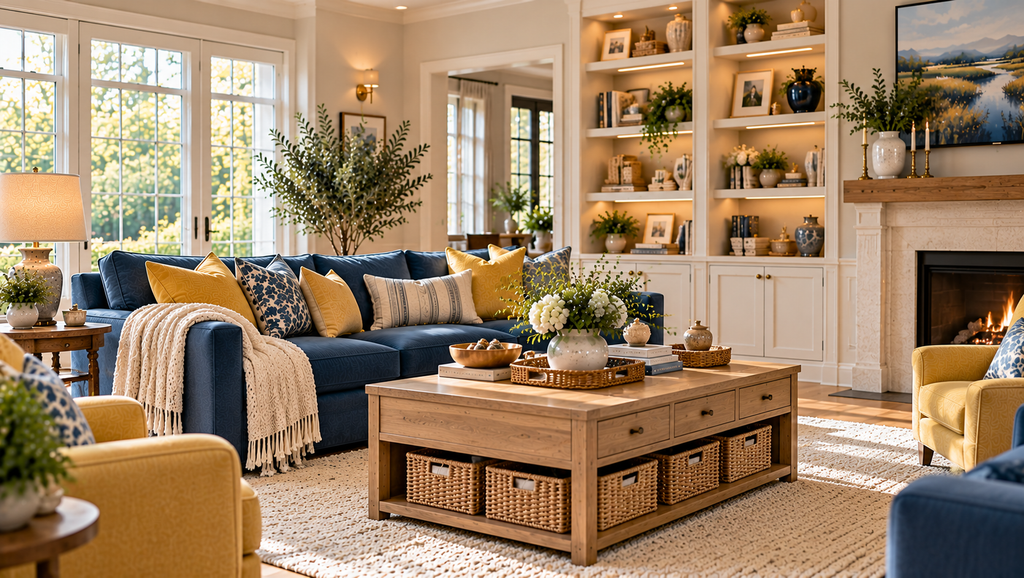
Artwork is an effective way to bring a yellow and blue living room together. A painting or gallery wall can repeat the main colors while introducing additional shades and patterns.
Abstract prints, landscapes, botanical illustrations, and contemporary geometric artwork can all work well. For example, a large abstract painting featuring navy, pale blue, mustard, and cream can connect a blue sofa with yellow cushions.
Choose artwork that suits the scale of your wall and furniture. A large piece above the sofa creates a clear focal point, while a small gallery wall adds personality to an otherwise simple space.
Frames also influence the final result. Natural wood creates a relaxed look, black frames add definition, and brass frames provide a touch of elegance. Coordinate the frames with other finishes in the room for a more cohesive appearance.
13. Use Smart Storage to Keep the Room Clutter-Free
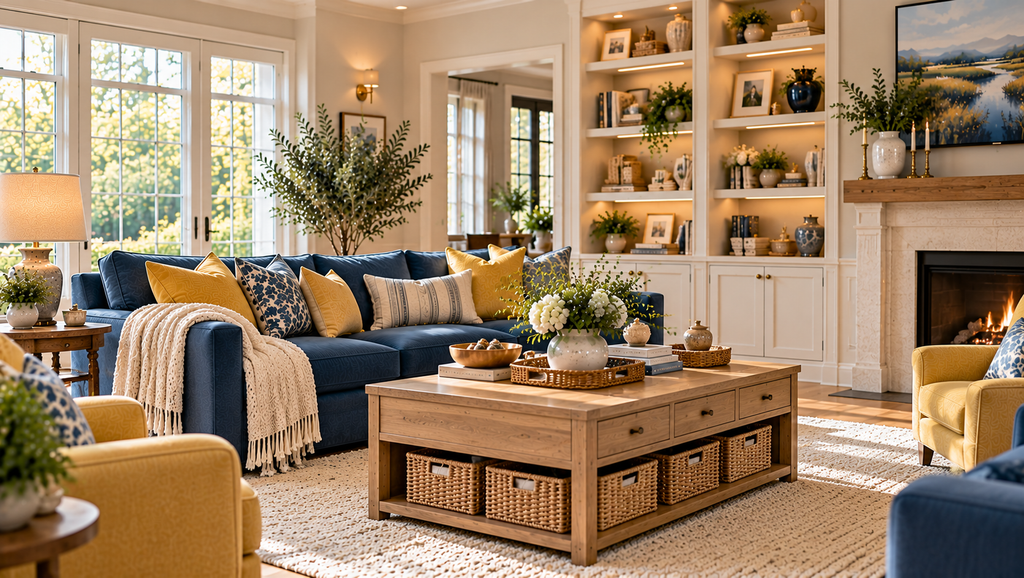
A well-organized living room allows the yellow and blue color scheme to stand out. Too many accessories, scattered items, and crowded surfaces can make even a beautifully decorated room feel smaller and less relaxing.
Built-in shelves provide space for books and carefully selected decorative objects. Storage ottomans can hide blankets, while baskets keep smaller everyday items organized. A coffee table with drawers or a lower shelf provides useful storage without taking up additional floor space.
For a visually consistent look, choose baskets and storage boxes in natural beige, cream, or muted blue. Yellow can remain an accent through cushions, artwork, and small decorative pieces.
In smaller living rooms, prioritize furniture that serves more than one purpose. Keeping walkways open and surfaces relatively clear helps the room feel spacious, functional, and inviting.
Practical Tips for Decorating with Yellow and Blue
Before choosing your furniture and accessories, consider these simple styling tips:
- Choose a dominant color: Use blue for larger elements such as walls, rugs, or sofas, then introduce yellow through accents.
- Repeat both colors: Echo yellow and blue in several places to make the design feel intentional.
- Use neutral shades: Cream, white, beige, and natural wood create breathing room between stronger colors.
- Consider your lighting: Test paint and fabric samples in your actual living room before making major purchases.
- Mix textures: Velvet, linen, wool, jute, and wood add depth without requiring more colors.
- Keep the layout functional: Leave enough space around furniture for comfortable movement and everyday activities.
- Personalize the design: Choose artwork, plants, and decorative accessories that reflect your taste instead of following every trend.


