

The best cabin kitchen ideas combine rustic charm, natural materials, and practical design to create a space that feels warm, welcoming, and functional. Whether you own a mountain retreat, a lakeside cottage, or a small log cabin, thoughtful design choices can transform your kitchen into one of the most inviting areas of your home.
From rich wood cabinetry and natural stone backsplashes to farmhouse sinks and clever storage solutions, cabin kitchens offer endless opportunities to blend traditional character with modern convenience. You can embrace a classic rustic aesthetic or create a more contemporary look with clean lines, understated colors, and modern appliances.
In this guide, discover 15 cabin kitchen ideas inspired by timeless interior design principles. Each idea includes practical suggestions to help you create a beautiful kitchen that complements your cabin’s surroundings while making everyday cooking and entertaining more enjoyable.
1. Incorporate Natural Wood Elements for Warmth
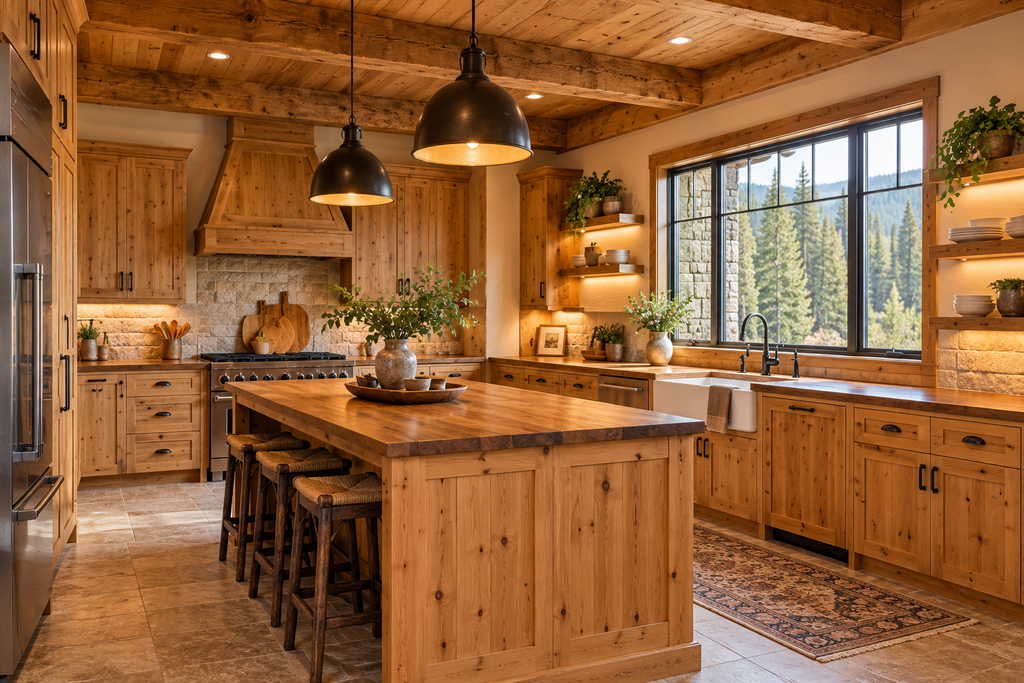
Natural wood is one of the defining features of a beautiful cabin kitchen. Exposed ceiling beams, solid wood cabinets, butcher-block countertops, and wooden shelving introduce texture and warmth while connecting the interior with the surrounding landscape.
Pine and cedar can create a traditional cabin atmosphere, while oak and walnut offer richer grain patterns and a more refined appearance. You can preserve the natural grain with a clear finish or choose a slightly darker stain to emphasize the rustic character.
For a balanced design, combine wood cabinetry with neutral walls, simple hardware, and carefully placed lighting. This approach allows the natural material to remain the focal point without making a small kitchen feel visually crowded.
2. Optimize Small Cabin Kitchens with Smart Storage
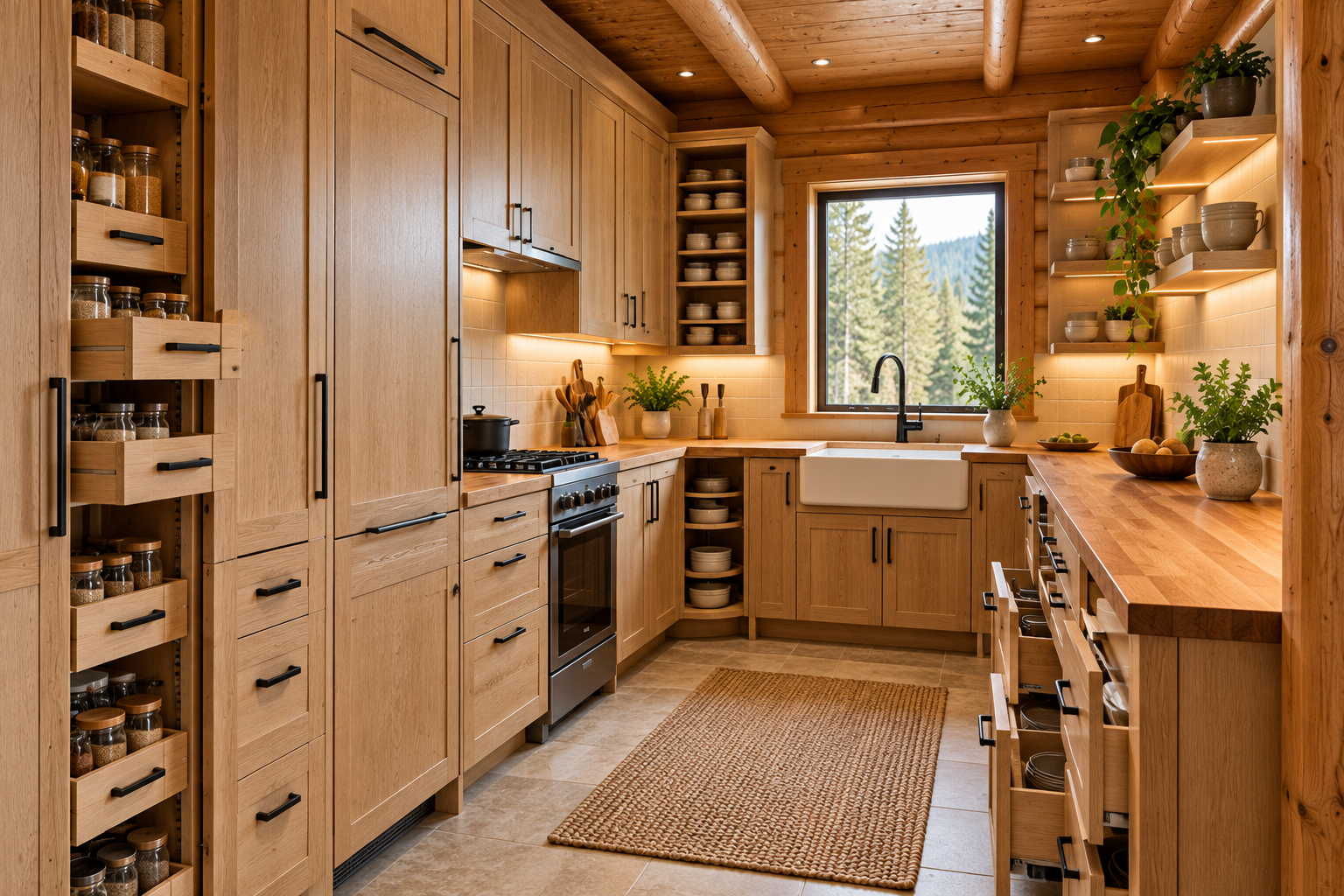
Small cabin kitchen ideas should focus on making every inch useful without sacrificing the room’s cozy character. Limited floor space can make cooking and storage challenging, but thoughtful cabinetry and well-planned organization can improve functionality considerably.
Consider pull-out pantry shelves, deep drawers, vertical dividers, corner cabinets, and wall-mounted racks for frequently used utensils. Open shelves can provide easy access to everyday dishes, while closed cabinets keep less attractive items out of sight.
If your kitchen has a narrow layout, use light-colored walls, consistent finishes, and uncluttered countertops to create a more open appearance. Storage solutions designed around your actual cooking habits will help the kitchen feel organized rather than overcrowded.
3. Choose Durable Rustic Countertops
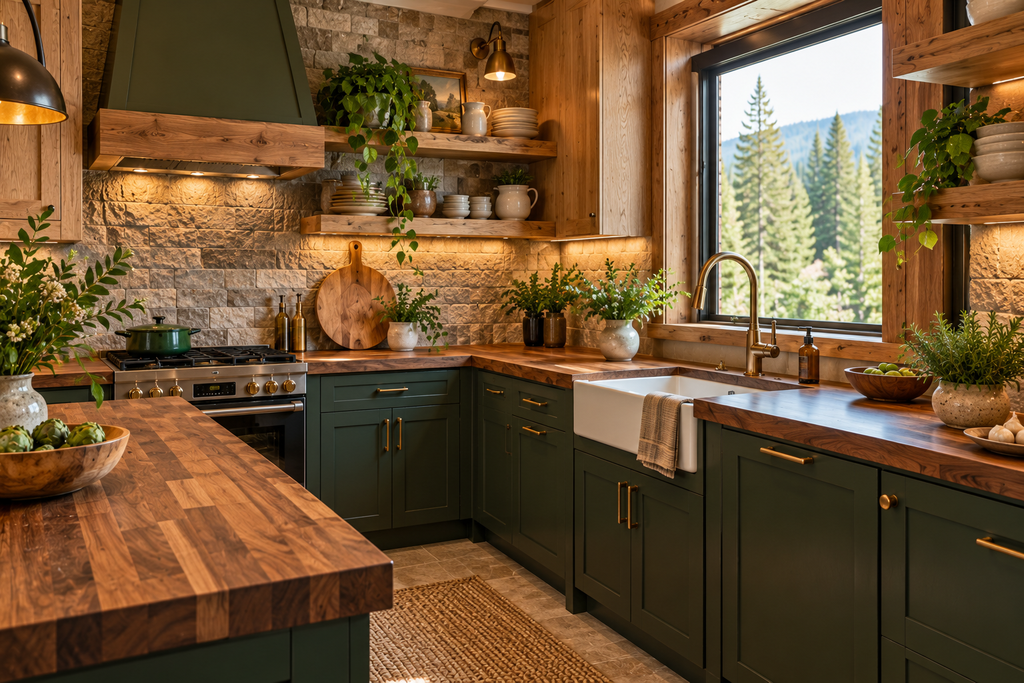
Countertops play an important role in both the appearance and functionality of a cabin kitchen. Natural materials such as butcher block, soapstone, granite, and concrete can complement rustic cabinetry while providing useful work surfaces for food preparation.
Butcher block introduces warmth and visible wood grain, while soapstone offers a deep, understated appearance. Granite provides natural patterns, and concrete can create a more contemporary industrial contrast against traditional timber.
Choose a countertop according to your cooking habits, maintenance preferences, and budget. Consider how the material responds to moisture, heat, scratches, and staining before making a final decision.
4. Add Open Shelving for Easy Access

Open shelving creates a relaxed, welcoming appearance in rustic cabin kitchens. Wooden shelves can display everyday plates, mugs, glass jars, cookbooks, and small decorative pieces while keeping frequently used items within reach.
Reclaimed wood paired with black metal brackets creates an industrial-rustic combination, while natural oak shelves and concealed supports produce a cleaner, more contemporary look.
To prevent open shelving from appearing cluttered, group similar items together and leave some empty space between displays. Keep frequently used objects on the lower shelves and reserve higher shelves for lightweight decorative items.
5. Use Vintage Fixtures to Enhance Character
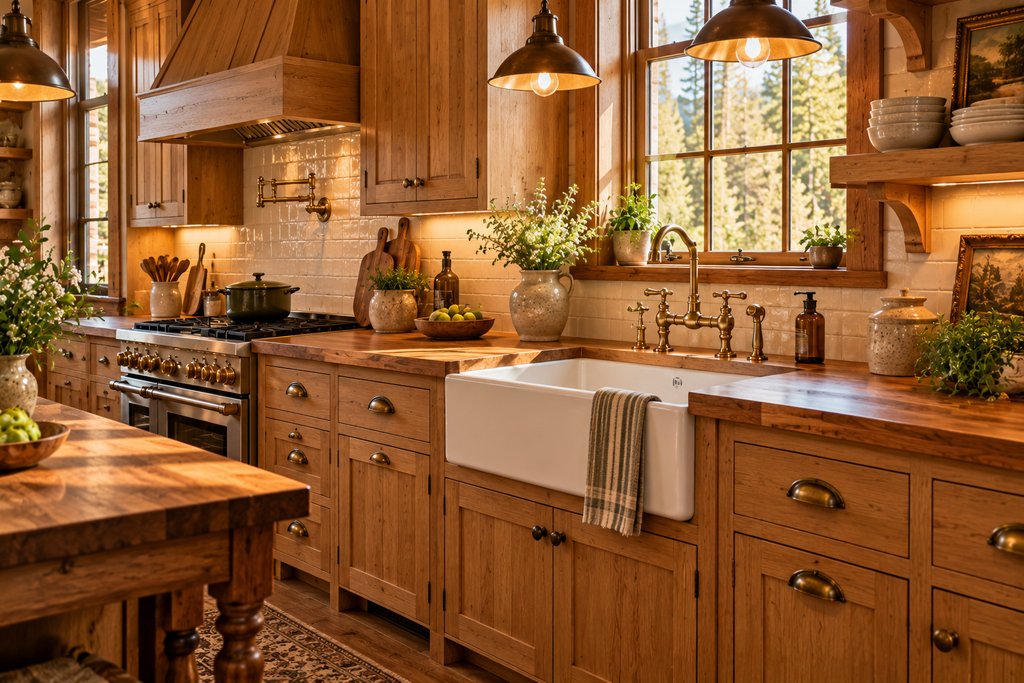
Vintage-inspired fixtures add personality and visual interest to a cabin kitchen. Antique-style cabinet pulls, traditional faucets, aged-brass finishes, and rustic pendant lights can help create a sense of history without requiring a complete renovation.
Consider pairing dark bronze handles with natural oak cabinets or using a brushed-brass faucet against a stone backsplash. These details work particularly well when the rest of the kitchen remains relatively simple.
You can also incorporate reclaimed accessories, vintage-inspired wall clocks, or handmade pottery to reinforce the character of the space. Choose a few meaningful details rather than filling every surface with decorative objects.
6. Combine Modern Appliances with Traditional Design
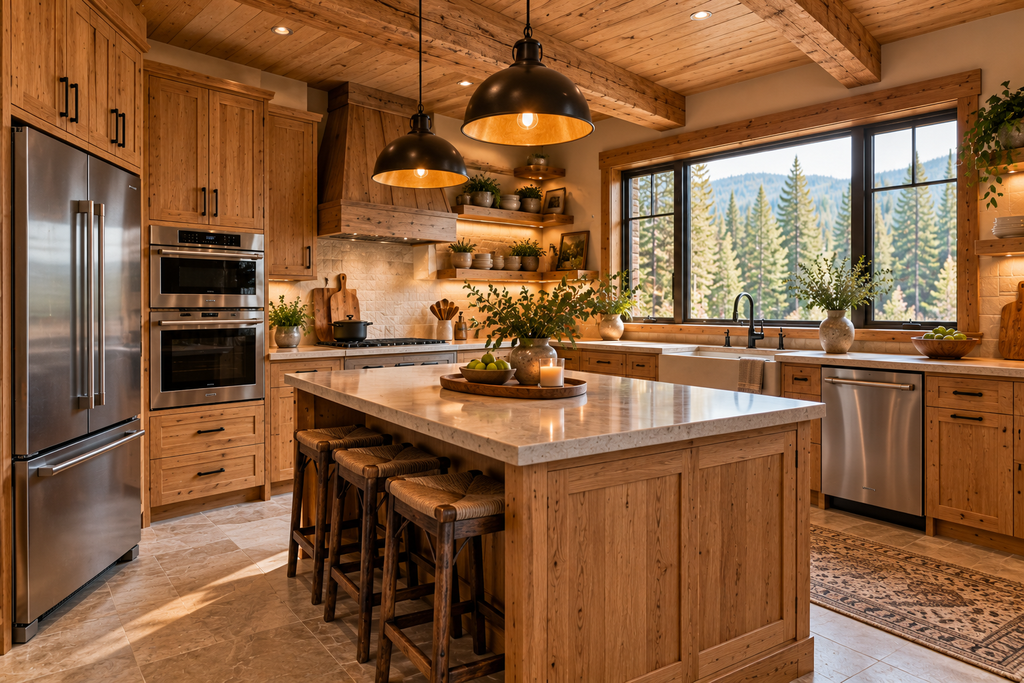
Modern appliances can improve a cabin kitchen’s convenience without taking away its rustic charm. The key is to select finishes and placements that complement the cabinetry, countertops, and overall color scheme.
Stainless-steel appliances create a practical, contemporary contrast against timber cabinets. Matte-black appliances can produce a more understated look, while integrated appliances help maintain a seamless appearance in smaller kitchens.
Consider energy-efficient refrigerators, induction cooktops, and well-positioned dishwashers when planning a renovation. The best combination balances the cabin’s traditional materials with the features you need for everyday cooking.
7. Install a Stone or Brick Backsplash
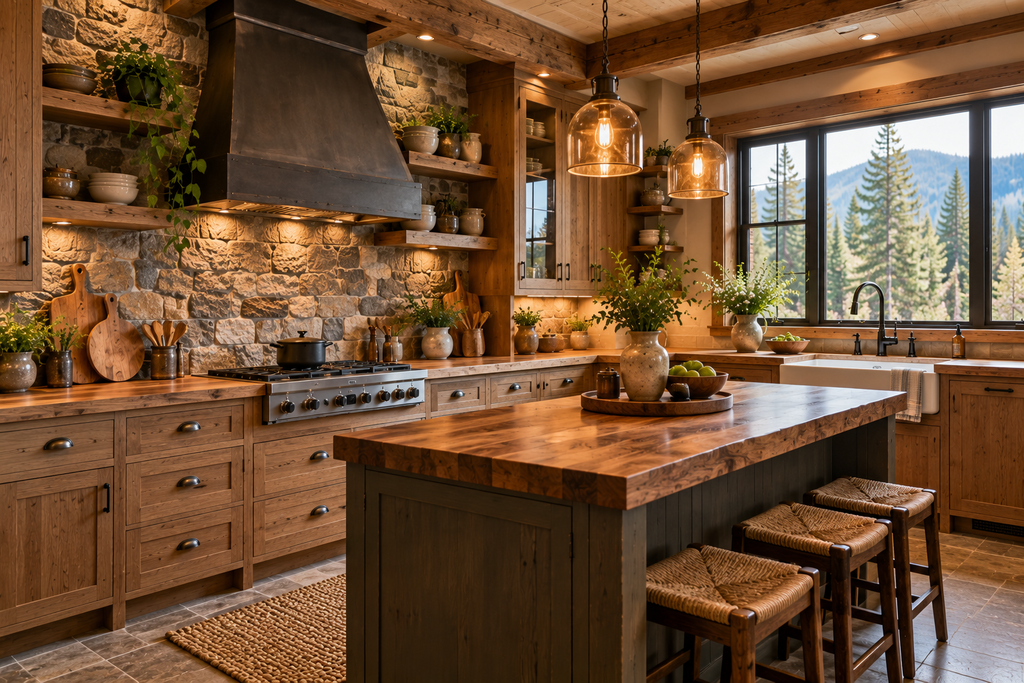
A stone or brick backsplash introduces natural texture and visual depth to a cabin kitchen. It can create a connection with the surrounding landscape while protecting the wall behind the sink, cooktop, and food-preparation areas.
Rough-cut stone offers a traditional mountain-cabin appearance, while exposed red brick creates a warm farmhouse atmosphere. Slate and muted gray stone can provide a more contemporary finish.
Because textured surfaces can collect grease and dust, choose an appropriate finish and consider cleanability when installing the backsplash near a cooking area. The material should complement the cabinetry without overwhelming the room.
8. Install a Farmhouse Sink for Style and Practicality

A farmhouse sink is a natural fit for many rustic kitchen designs. Its distinctive apron-front shape creates a traditional focal point, while its generous basin can make washing large pots, baking trays, and cookware more convenient.
White fireclay creates a classic country appearance, stainless steel offers a more contemporary finish, and copper can introduce rich color and texture.
Pair the sink with a sturdy faucet, practical countertop space, and cabinets that provide suitable support. Before purchasing, check the sink’s dimensions and installation requirements to ensure it fits your kitchen layout.
9. Choose Earthy Colors for a Calming Atmosphere
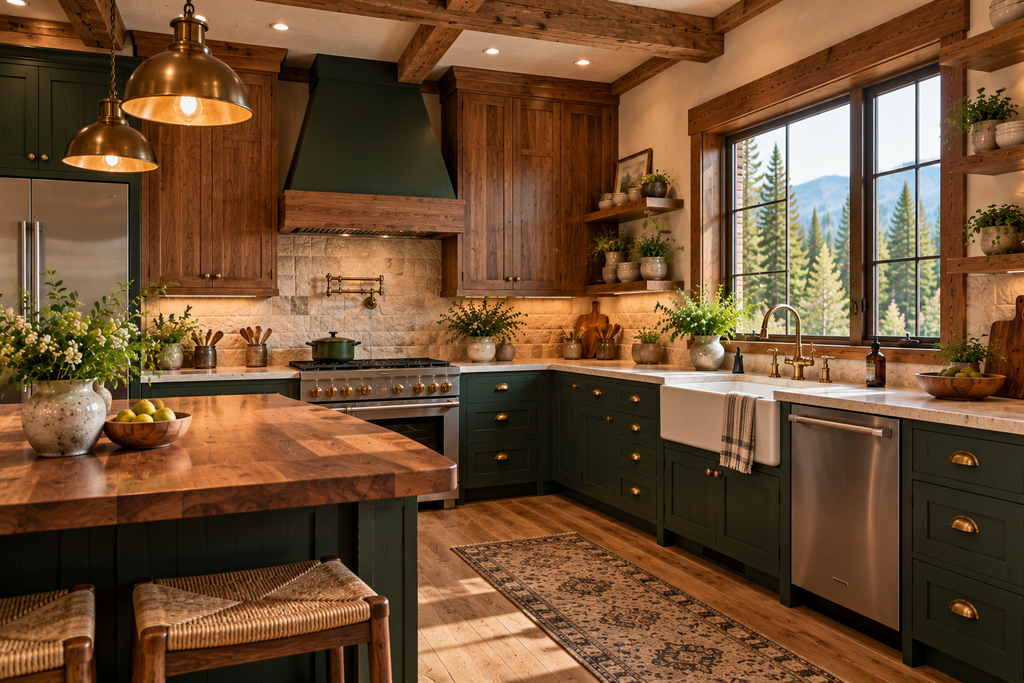
Earthy colors help a cabin kitchen feel connected to its natural surroundings. Shades such as warm beige, forest green, muted olive, clay, charcoal, and rich brown complement timber, stone, and other organic materials.
For a light and airy kitchen, combine cream walls with natural wood cabinetry and subtle green accents. If you prefer a moodier atmosphere, consider deep green cabinets, dark countertops, and warm brass hardware.
A balanced palette usually works better than using too many competing colors. Select one dominant shade, a complementary natural material, and a few restrained accents to create a cohesive look.
10. Install Pendant Lighting Above Key Areas
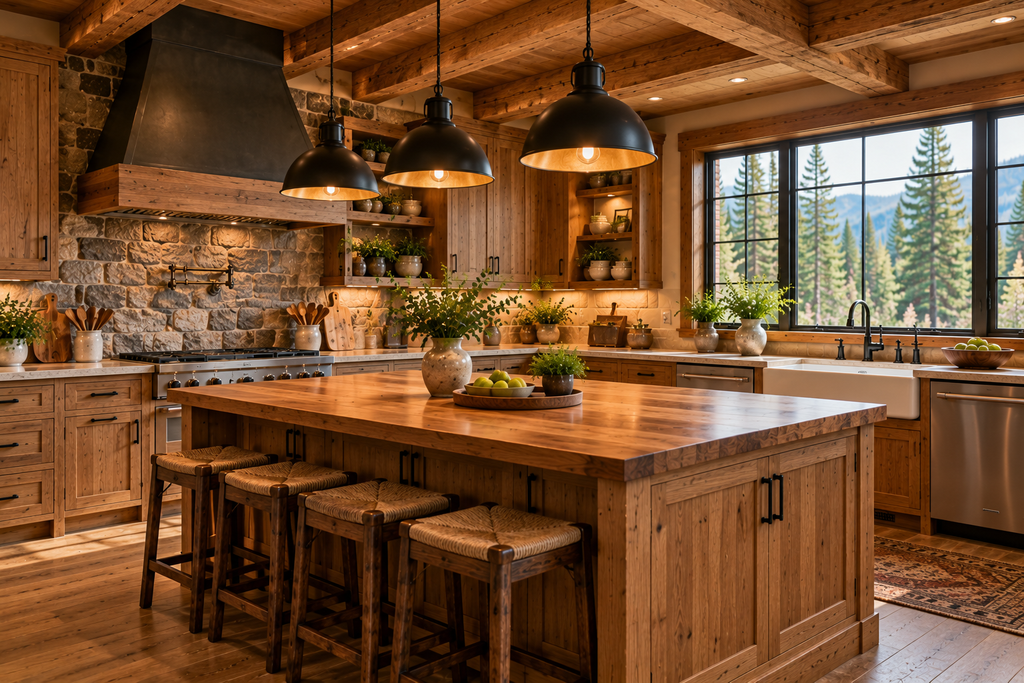
Pendant lighting adds both practical illumination and visual character to a cabin kitchen. Fixtures placed above an island, breakfast counter, or sink can define the area while creating a warm, inviting atmosphere.
Black metal pendants work well with rustic timber and stone, while aged-brass fixtures introduce a softer, more traditional finish. Glass shades can make a small kitchen feel less visually heavy.
Plan lighting according to the tasks performed in each area. Pendant fixtures can complement general ceiling lighting and under-cabinet lights, helping you create a kitchen that is comfortable to use during both daytime and evening hours.
11. Incorporate Reclaimed Materials for Sustainable Style

Reclaimed materials can give a cabin kitchen distinctive character while making use of existing resources. Reclaimed wood may be used for shelves, island panels, ceiling beams, or decorative accents, while salvaged metal and stone can add texture and history.
Each piece of reclaimed timber has its own grain, markings, and color variation, helping create a space that feels individual rather than mass-produced.
Before installation, make sure reclaimed materials are suitable for their intended use. Wood used near food-preparation areas should be properly cleaned, finished, and maintained, while structural components should be assessed for safety.
12. Design a Multipurpose Kitchen Island
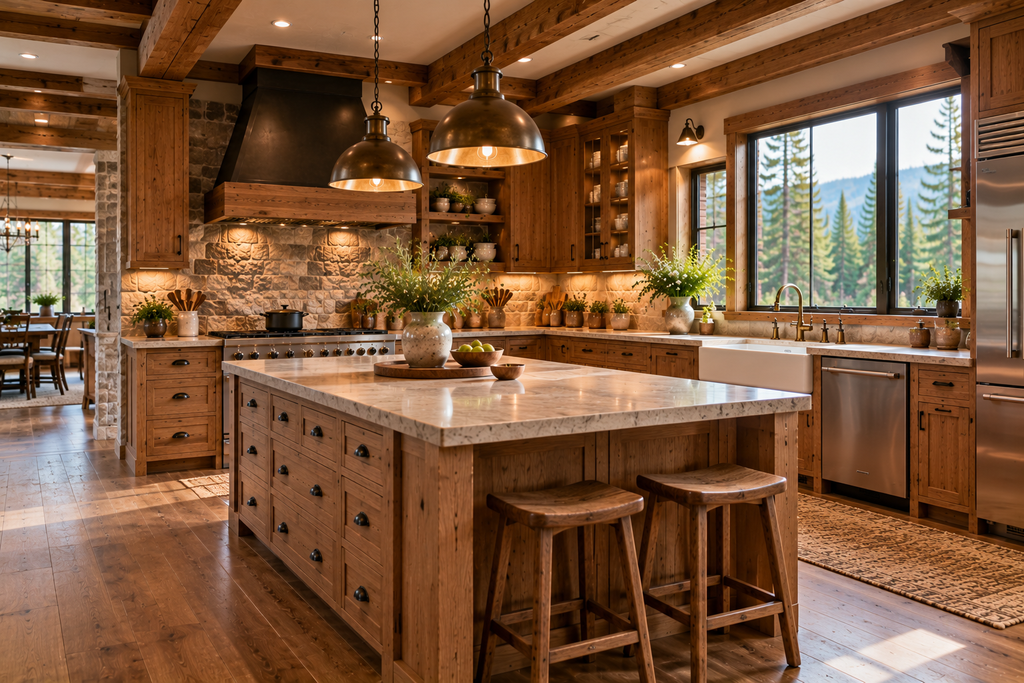
A kitchen island can provide extra workspace, storage, and an informal gathering area in a cabin home. When space allows, it can become the central feature of the kitchen, connecting food preparation with dining and conversation.
Choose an island size that leaves comfortable circulation space around cabinets and appliances. Built-in drawers, open shelves, and seating on one side can make the island more useful without adding unnecessary furniture.
For a cohesive rustic design, consider a wood island with a contrasting stone countertop or painted cabinetry that complements the rest of the kitchen. In smaller cabins, a narrow island or movable worktable may be a more practical solution.
13. Maximize Natural Light with Large Windows
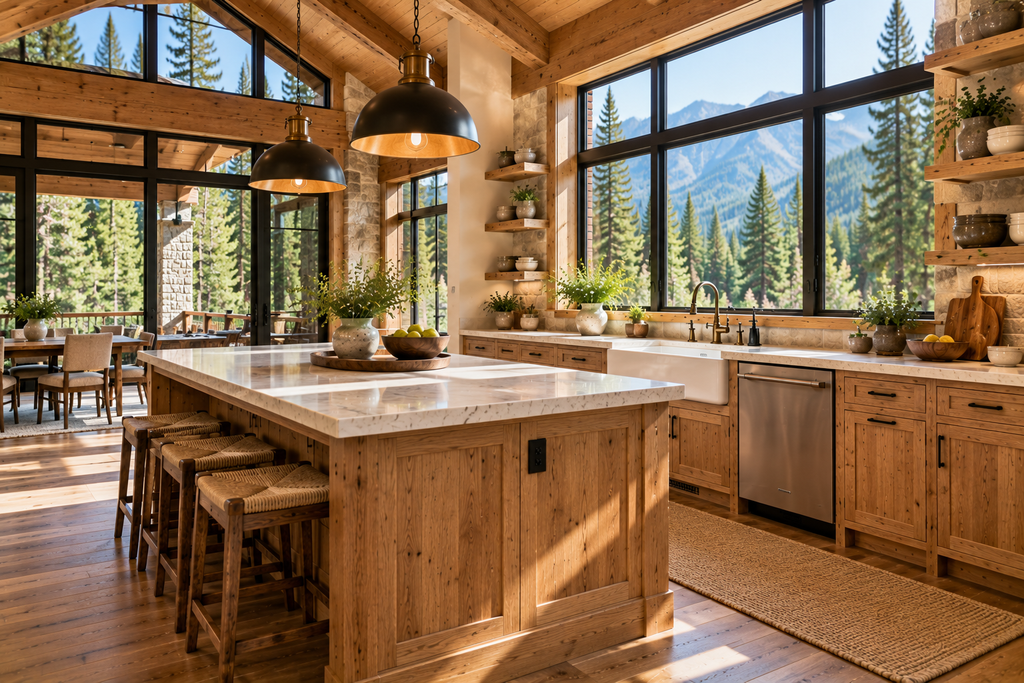
Natural light can make a cabin kitchen feel more spacious and create a stronger visual connection with the outdoors. Large windows frame woodland, mountain, or lakeside views while illuminating wood grain, stone surfaces, and other natural materials.
Where a large window is not practical, consider lighter wall finishes, reflective backsplash materials, and layered artificial lighting to brighten the room. Skylights may also be suitable when the roof structure and renovation budget allow.
Think carefully about window placement in relation to cabinets, sinks, and work surfaces. The goal is to bring in daylight while maintaining privacy, storage, and practical counter space.
14. Create a Cozy Dining Nook Inside the Kitchen

A dining nook can make a cabin kitchen feel more personal and inviting. Built-in benches, a small wooden table, and comfortable cushions can create a convenient place for breakfast, coffee, or relaxed family meals.
A window-side nook is particularly appealing because it uses natural light and makes the most of an underused corner. Storage beneath a built-in bench can also help keep small kitchens organized.
Choose durable upholstery and a table size that allows people to sit comfortably without blocking the kitchen’s main circulation routes. Natural wood, linen, and earthy textiles work especially well in rustic interiors.
15. Use Textured Flooring to Add Depth
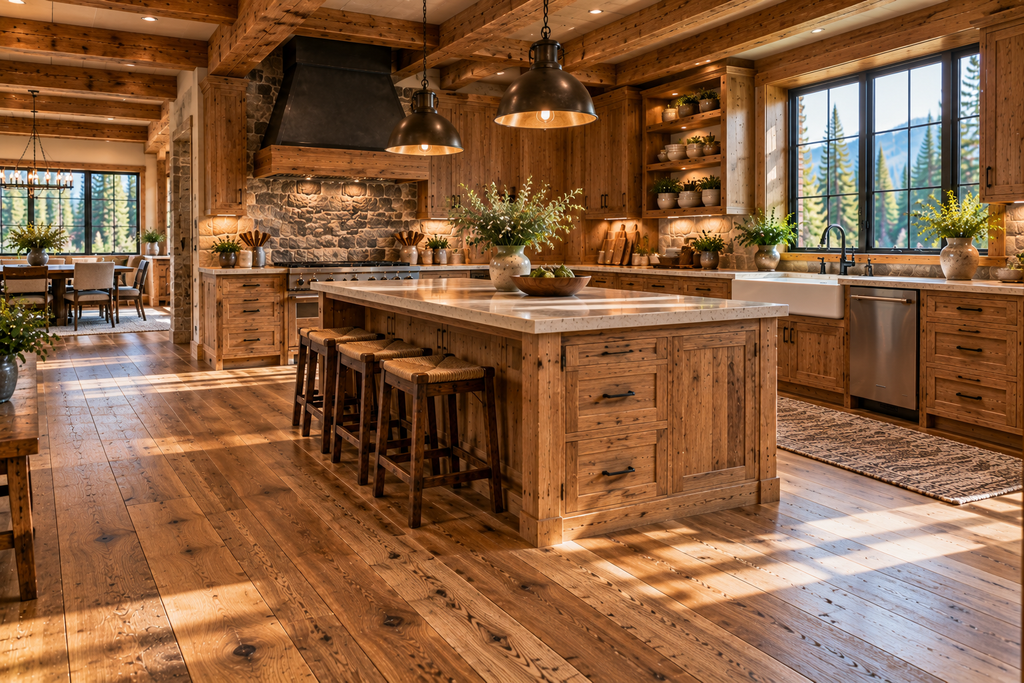
Flooring helps establish the overall character of a cabin kitchen. Wide-plank hardwood, natural stone, slate, and patterned ceramic tiles can complement rustic materials while providing a durable surface for everyday use.
Wood flooring creates a seamless connection with timber cabinetry, while slate and stone introduce a more rugged, earthy quality. Patterned tiles can add visual interest in smaller areas without requiring additional decorative accessories.
Consider moisture resistance, slip resistance, cleaning requirements, and maintenance when selecting a floor. The best material will balance the look you want with the practical demands of a working kitchen.
How to Choose the Best Cabin Kitchen Design for Your Home
Before starting a cabin kitchen renovation, consider the size of your space, the condition of existing materials, your storage needs, and the amount of maintenance you are comfortable with.
Consider Your Cabin’s Size
Small cabin kitchens benefit from vertical storage, compact appliances, light finishes, and carefully planned work surfaces. Larger kitchens may accommodate an island, a dedicated dining area, or more extensive cabinetry.
Select Materials That Suit Your Lifestyle
Natural wood, stone, and brick can create beautiful rustic interiors, but each material has different maintenance requirements. Choose finishes that work with your cooking habits, cleaning routine, and budget.
Create a Cohesive Color Palette
Choose a small group of complementary colors inspired by the surrounding landscape. Warm wood, soft cream, muted green, and stone gray are versatile starting points for a rustic kitchen.
Balance Rustic Details with Modern Convenience
Traditional materials can work beautifully with contemporary appliances, effective task lighting, and practical storage. The aim is to preserve the cabin’s character while creating a kitchen that is comfortable to use every day.
Final Thoughts
The most successful cabin kitchen ideas combine natural materials, practical storage, thoughtful lighting, and a cohesive color palette. Whether you prefer a traditional log cabin kitchen or a modern rustic interior, small design choices can make a meaningful difference to the room’s comfort and usability.
Start with the features that matter most to your daily routine, then build the design around materials and colors that complement your cabin’s surroundings. With careful planning, your kitchen can become a warm, functional space that feels connected to nature and welcoming throughout the year.


