
European kitchen design combines thoughtful functionality, beautiful materials, and distinctive regional character. From the relaxed charm of French country kitchens to the clean lines of contemporary German interiors, European-inspired spaces offer plenty of ways to create a kitchen that feels both practical and sophisticated.
The appeal goes beyond appearance. Well-planned European kitchens often emphasize efficient storage, durable surfaces, natural textures, and layouts that support everyday cooking. Some styles feel warm and rustic, while others are bright, minimalist, or distinctly luxurious.
Whether you are renovating a small kitchen, updating your cabinetry, or designing a new home, these 15 European kitchen ideas will help you find a style that suits your space, lifestyle, and budget.
1. French Country Kitchens with Warm, Rustic Charm

French country kitchens bring together soft colors, natural materials, and traditional details to create a welcoming atmosphere. This style works especially well for homeowners who appreciate a lived-in appearance rather than a perfectly polished, contemporary interior.
Choose cream, warm white, muted sage green, or pale blue cabinetry. Shaker-style or subtly distressed cabinet doors can introduce traditional character, while aged brass or antique bronze hardware adds warmth. Natural stone countertops, wooden ceiling beams, and ceramic accessories help complete the look.
Open shelving can display everyday dishes, glass jars, and handmade pottery. For a more contemporary interpretation, pair traditional cabinetry with streamlined appliances and understated pendant lighting.
How to recreate the look: Start with a warm neutral color palette, introduce one or two natural materials, and use decorative accessories sparingly to keep the room from feeling cluttered.
2. Scandinavian Kitchens with Clean, Minimalist Design
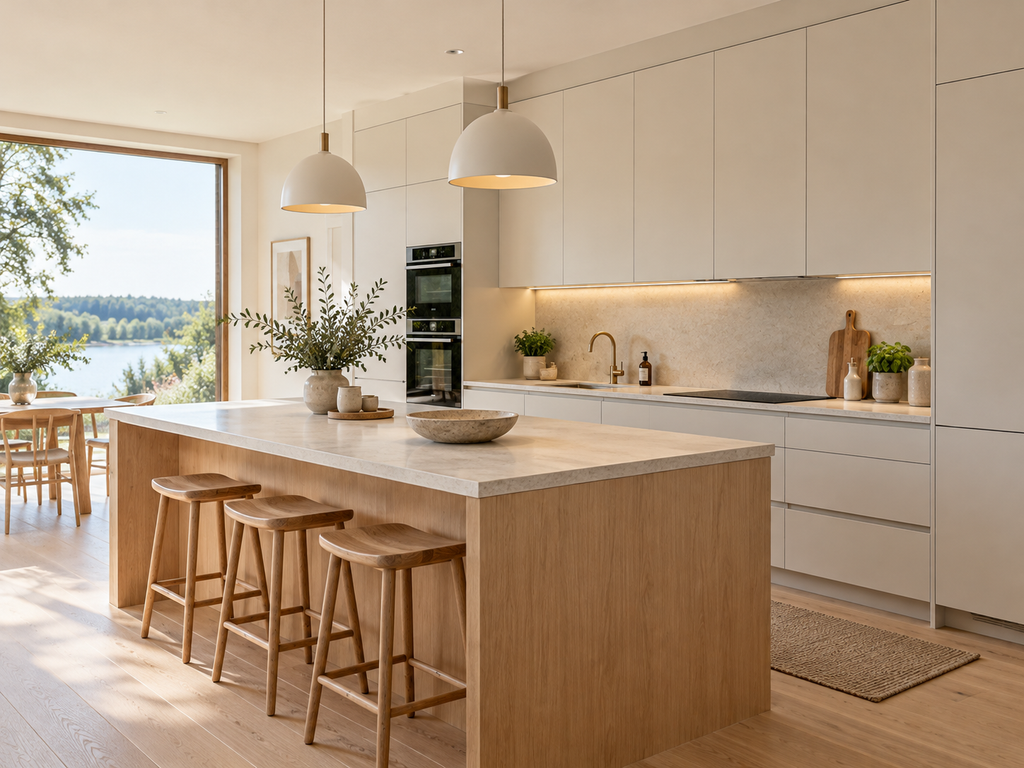
Scandinavian kitchens are known for their simplicity, natural light, and practical approach to everyday living. Their understated appearance makes them especially suitable for smaller homes, apartments, and open-plan interiors.
White, pale gray, and soft beige cabinets create a bright foundation. Combine them with light oak flooring, simple worktops, and minimal hardware for a cohesive appearance. If the kitchen receives limited daylight, reflective surfaces and carefully positioned lighting can help it feel more open.
Storage is essential to this style. Deep drawers, concealed organizers, and integrated appliances keep frequently used items accessible without leaving every surface exposed.
To avoid an overly sterile result, add warmth through wooden stools, textured linen, woven baskets, or a few green plants.
How to recreate the look: Use a restrained palette, maximize natural light, and prioritize practical storage over unnecessary decoration.
3. Italian Kitchens with Elegant Stone Countertops
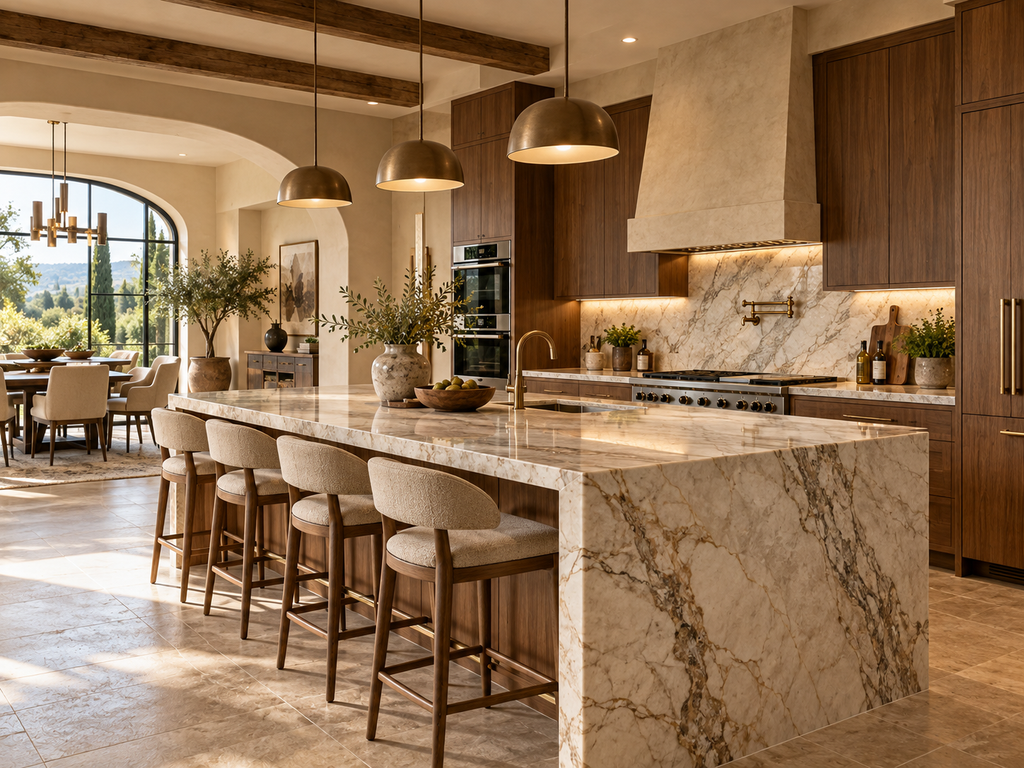
Italian-inspired kitchens often balance refined materials with a warm, sociable atmosphere. Natural stone, expressive wood grain, and carefully selected lighting can make the kitchen feel luxurious without relying on excessive ornamentation.
For the countertops or backsplash, consider marble, quartzite, or a marble-look surface. Each material has different maintenance requirements, so select one according to your cooking habits and budget. Pair the stone with walnut cabinetry, warm white cabinets, or muted taupe finishes.
A large island can provide additional preparation space, informal seating, and a natural gathering point. Where space allows, use pendant lights above the island to establish a visual focal point.
Keep decorative details coordinated rather than matching every finish exactly. A combination of brushed metal, natural wood, and understated ceramics can give the room a collected, sophisticated appearance.
How to recreate the look: Invest in one standout material, such as a beautiful stone countertop, and balance it with warm cabinetry and simple architectural details.
4. Spanish Mediterranean Kitchens with Terracotta Accents
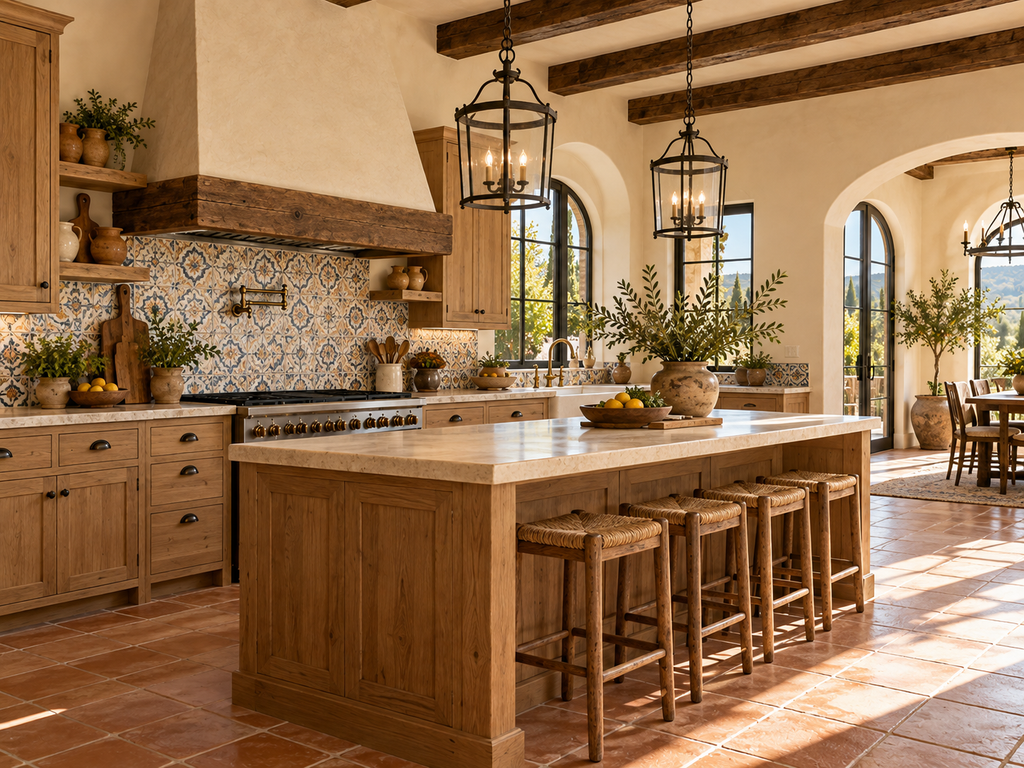
Spanish Mediterranean kitchens are inspired by warm climates, handcrafted materials, and relaxed indoor-outdoor living. Their distinctive character comes from earthy colors, textured finishes, and architectural features that feel natural rather than overly formal.
Terracotta floor tiles, cream plaster walls, rustic timber beams, and handmade ceramic backsplashes can create an inviting foundation. Cabinetry in natural oak, warm white, or olive green complements these materials.
For a stronger Mediterranean look, introduce patterned tiles behind the cooking area or use decorative ceramics on open shelves. Black wrought-iron fixtures can provide contrast, while warm pendant lighting softens the overall appearance.
In a smaller kitchen, use terracotta or patterned tiles in a limited area instead of covering every surface. This preserves the character of the style without overwhelming the room.
How to recreate the look: Combine earthy tones, textured surfaces, and handcrafted accents, keeping the strongest patterns concentrated in one or two areas.
5. German Kitchens with Precision and Smart Storage
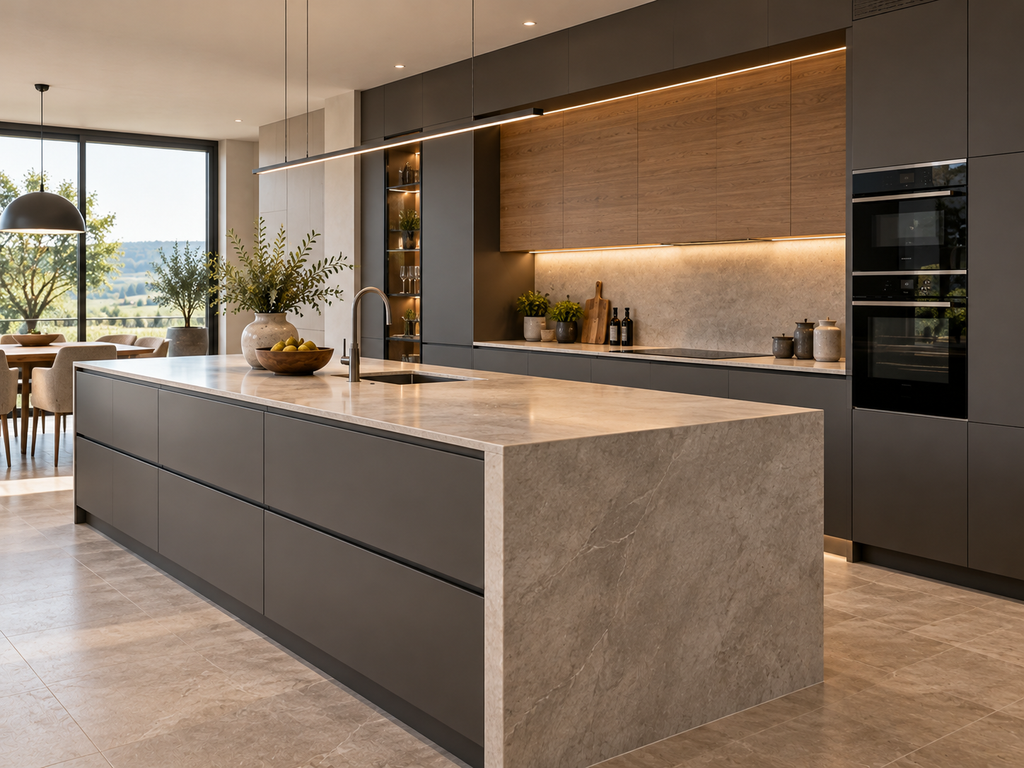
German-inspired kitchen design emphasizes efficient planning, clean geometry, and carefully integrated storage. It is a useful approach for households that want a contemporary kitchen with an organized, uncluttered appearance.
Handleless cabinets, flat-front doors, continuous worktops, and integrated appliances establish a streamlined look. Matte white, graphite, warm gray, and natural wood are versatile choices that work across different interior styles.
Function should guide the layout. Consider full-height pantry cabinets, pull-out storage, deep drawers for cookware, and designated spaces for small appliances. These features can reduce visual clutter and make everyday tasks easier.
For visual warmth, combine sleek cabinetry with wood accents or a textured backsplash. A kitchen does not need to be entirely white or gray to feel modern and precise.
How to recreate the look: Plan storage and appliance placement before selecting decorative finishes. A well-organized layout is central to the overall effect.
6. English Cottage Kitchens with Traditional Character
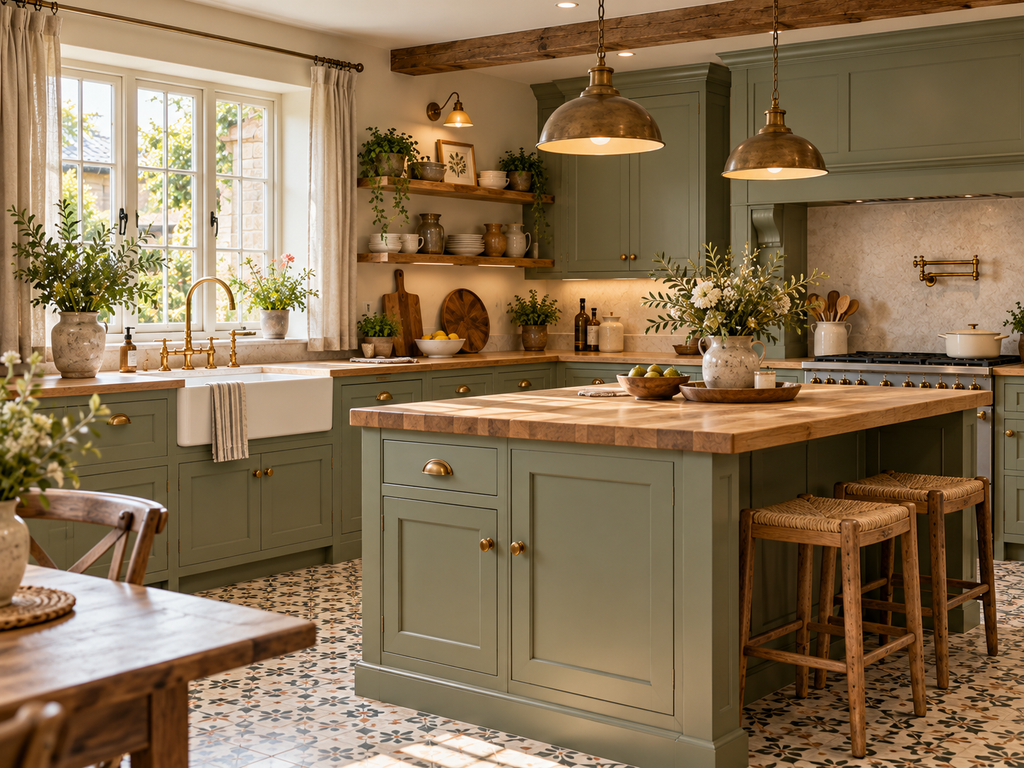
English cottage kitchens create a comfortable, welcoming atmosphere through painted cabinetry, traditional fixtures, natural textures, and carefully chosen decorative details.
Sage green, dusty blue, warm cream, and muted gray are excellent cabinet colors. Pair them with butcher-block countertops, natural stone, or other work surfaces suited to your maintenance preferences. A farmhouse-style sink and traditional faucet can strengthen the cottage aesthetic.
Patterned floor tiles, open plate racks, and small pendant lights introduce personality. However, too many decorative elements can make the kitchen feel busy, particularly when the room is small.
Modern appliances can be incorporated without losing the traditional appearance. Choose integrated models where practical, or select finishes that complement the cabinetry.
How to recreate the look: Begin with painted cabinets and a traditional sink, then add a few personal details such as pottery, vintage-style lighting, or patterned textiles.
7. Dutch Kitchens with Creative Storage Solutions
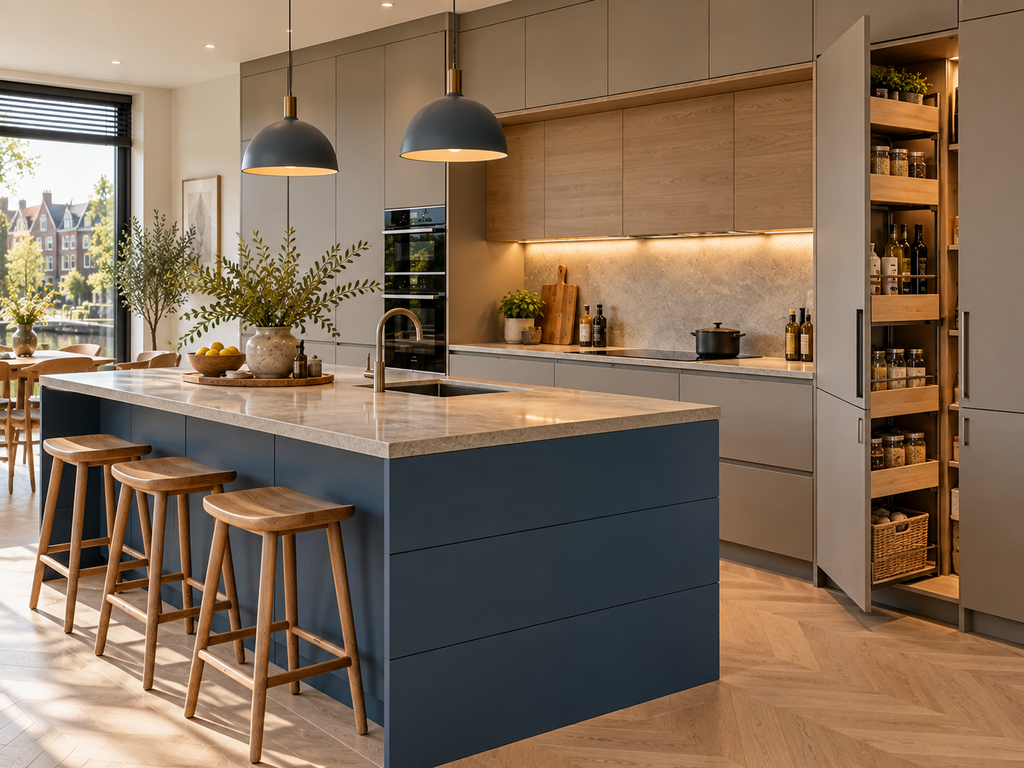
Dutch-inspired kitchens offer useful inspiration for homes where efficient space planning and contemporary design are equally important. Rather than relying on a single decorative style, this approach can combine clean cabinetry, practical organization, and confident color choices.
Tall cabinets make use of vertical space, while pull-out pantry shelves, drawer dividers, and corner organizers improve accessibility. In compact kitchens, extending cabinets toward the ceiling can provide additional storage while reducing unused gaps.
For color, consider deep blue, muted green, warm gray, or natural wood. A contrasting island or backsplash can introduce personality without disrupting the overall design.
Lighting also plays an important role. Combine general ceiling illumination with task lighting beneath cabinets and focused lighting over preparation areas.
How to recreate the look: Identify the items that create the most clutter, then design storage around how you actually cook and use the kitchen.
8. Greek-Inspired Kitchens with Natural Stone and White Finishes

Greek-inspired kitchens often draw on Mediterranean architecture, coastal colors, and simple natural materials. White surfaces, pale stone, and subtle blue accents create a bright and relaxed atmosphere.
Whitewashed walls or warm white cabinets work well with limestone-look countertops, textured plaster, and natural wood details. Blue-and-white ceramics can add color without making the kitchen feel overly themed.
For a more contemporary interpretation, combine white cabinetry with pale oak shelves, simple pendant lights, and discreet hardware. Natural textures help soften the contrast between the bright surfaces and darker appliances.
This style can also suit smaller kitchens because a light color palette creates visual continuity. Good task lighting and carefully planned storage remain important, particularly where counter space is limited.
How to recreate the look: Use white as the main color, introduce pale natural materials, and reserve blue for a few distinctive accessories or a small tiled area.
9. Portuguese Kitchens with Decorative Azulejo Tiles
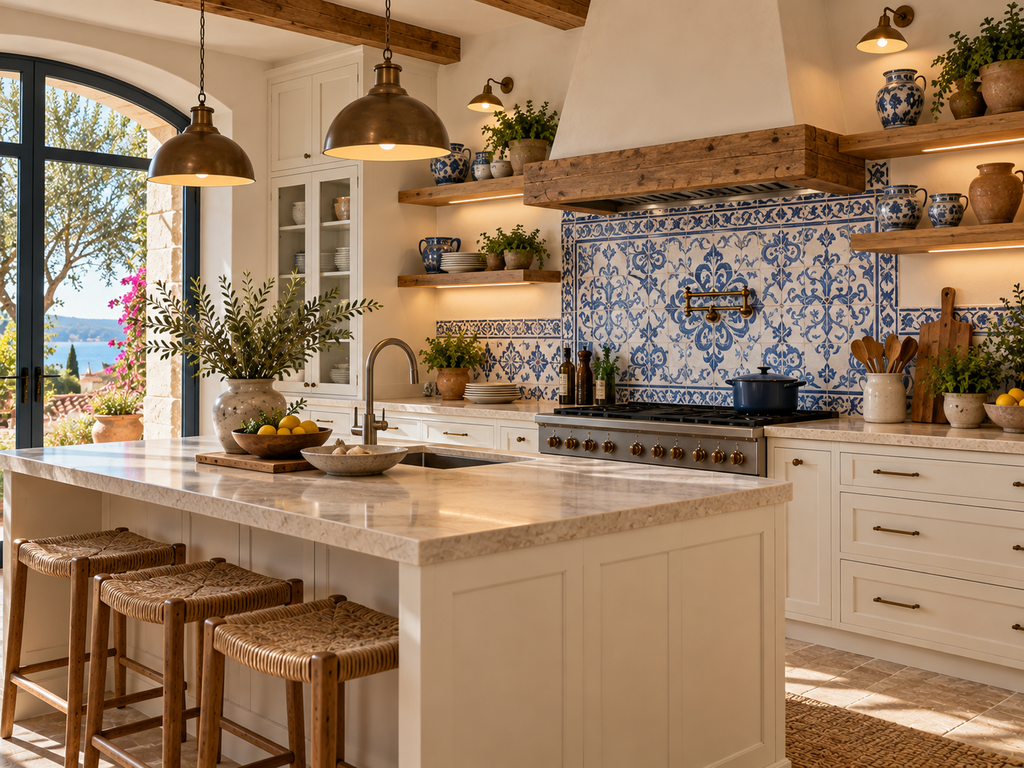
Portuguese azulejo tiles provide a distinctive way to introduce pattern, color, and cultural character into a European-inspired kitchen. Traditionally associated with decorative architectural surfaces, these tiles can become a focal point without requiring a complete renovation.
Choose blue-and-white geometric patterns for a classic appearance, or consider more colorful motifs for a bolder interior. A tiled backsplash works particularly well behind a sink or cooking area, where the pattern can be appreciated without dominating the entire room.
Keep the surrounding cabinetry relatively simple. White, natural wood, soft gray, or muted blue cabinets allow decorative tiles to stand out.
If authentic handmade tiles exceed your budget, consider suitable patterned ceramic alternatives. Confirm that the selected product is appropriate for the intended kitchen application and can be cleaned easily.
How to recreate the look: Let the backsplash provide the main decorative statement, and coordinate the remaining finishes with one or two colors from the tile pattern.
10. Swiss-Inspired Kitchens with Functional Elegance

Swiss-inspired kitchens offer a restrained combination of precision, quality materials, and practical organization. Their appeal lies in thoughtful proportions and the careful coordination of finishes rather than elaborate decoration.
Flat-front cabinetry, integrated appliances, and concealed storage create a calm visual appearance. Warm white, stone gray, muted beige, and natural wood provide a versatile foundation.
Choose durable work surfaces suited to daily cooking, and consider continuous countertop lines to make the layout feel cohesive. Recessed lighting and discreet under-cabinet illumination can improve visibility without introducing unnecessary visual elements.
The design also benefits from consistency. Align cabinet fronts where possible, maintain clear work areas, and avoid introducing too many competing materials.
How to recreate the look: Focus on precise cabinet alignment, dependable storage, coordinated finishes, and lighting that supports everyday tasks.
11. Austrian Kitchens with Heritage-Inspired Details
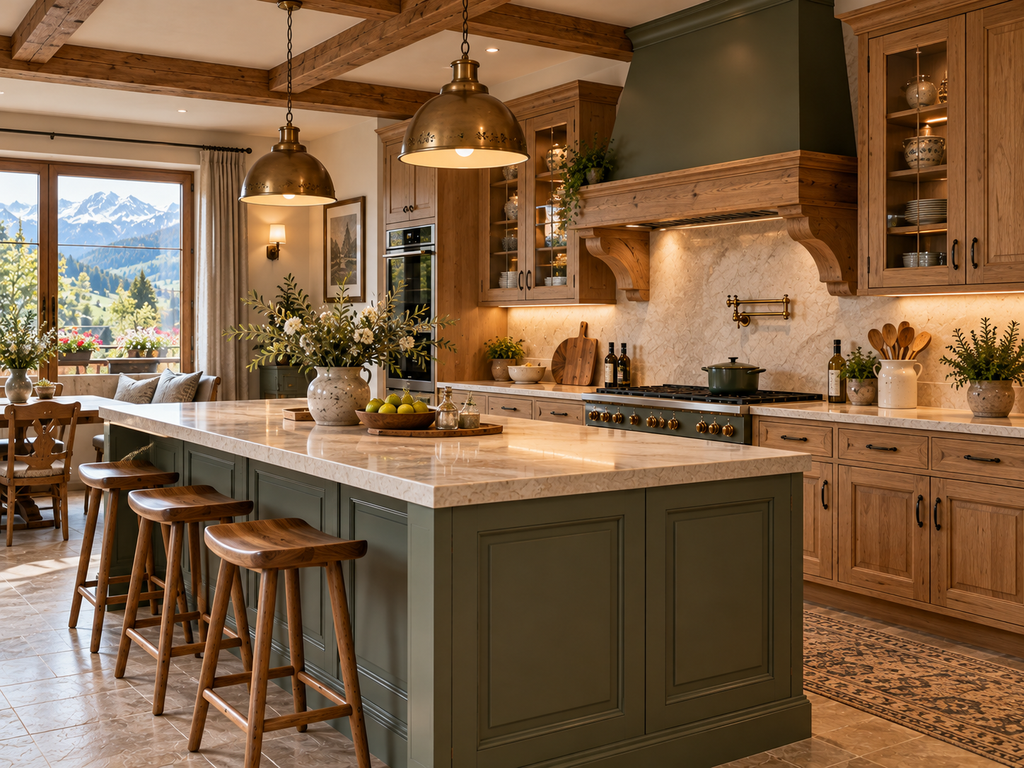
Austrian-inspired kitchens can bring traditional European craftsmanship into a comfortable, contemporary setting. Warm timber, classic cabinet profiles, and subtle decorative details create a sense of heritage without requiring a fully historic interior.
Natural oak, walnut, and other warm wood finishes can establish the main palette. Pair them with cream cabinetry, stone-look worktops, or muted green accents for a balanced result.
Traditional pendant lights, framed cabinet doors, and handcrafted ceramics can introduce character. To keep the room practical, combine these features with modern drawer systems, efficient appliances, and easy-to-maintain surfaces.
This approach works particularly well in homes where the kitchen connects to a dining room or living area, because the warm materials can help create continuity between spaces.
How to recreate the look: Use wood as a unifying element, add a few traditional details, and keep the underlying layout suited to contemporary cooking.
12. French Alpine Kitchens with Natural Wood and Stone
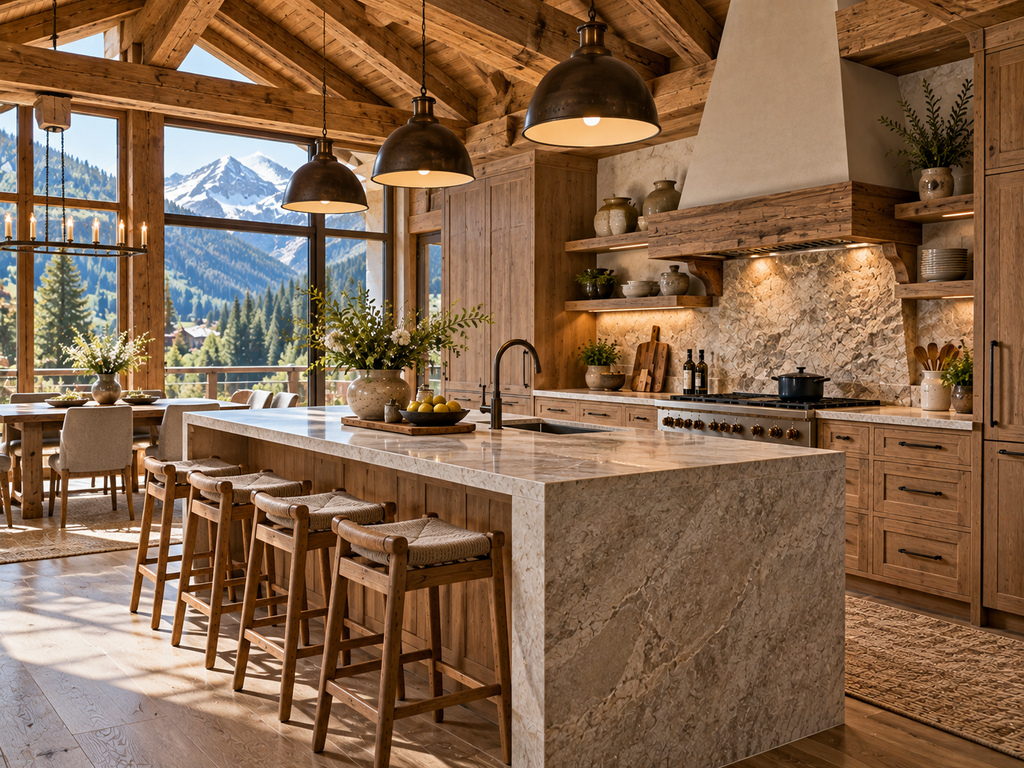
French Alpine kitchens take inspiration from mountain homes, where natural materials and a cozy atmosphere are central to the design. Exposed timber, textured stone, and warm lighting can create a distinctive interior that feels connected to its surroundings.
Wooden ceiling beams, oak cabinetry, stone backsplashes, and rustic floor finishes help establish the look. For a lighter interpretation, combine natural wood with cream walls and pale countertops.
Lighting should feel warm and layered. Pendant lights over an island or dining table can provide focused illumination, while wall lights and recessed fixtures help maintain comfortable ambient lighting.
In a modern home, you can achieve a similar effect without reproducing a traditional chalet. A timber island, stone-look backsplash, and warm neutral palette may be enough to evoke the style.
How to recreate the look: Combine two or three natural textures, such as wood, stone, and linen, rather than introducing rustic finishes everywhere.
13. Belgian-Inspired Kitchens with Natural Textures
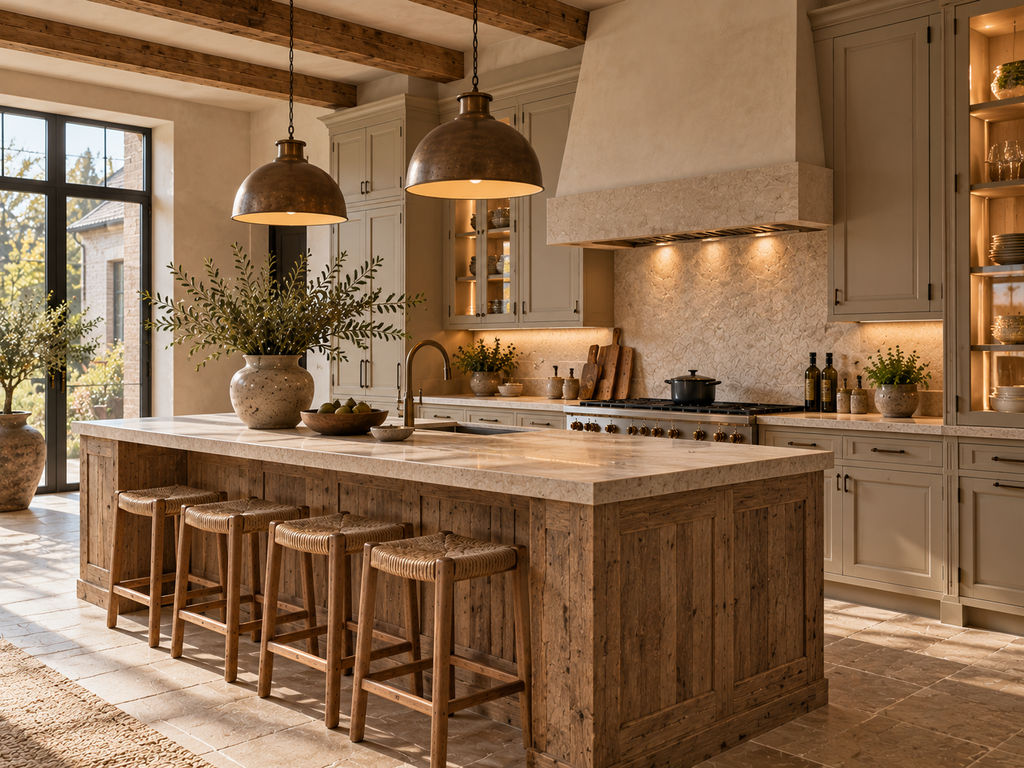
Belgian-inspired interiors are often associated with restrained colors, tactile materials, and a balance between rustic warmth and contemporary simplicity. This combination can create a kitchen that feels refined without appearing overly formal.
Consider natural oak, reclaimed timber, limestone-look surfaces, and muted shades of gray or beige. Matte cabinetry and understated hardware help maintain a calm appearance, while handcrafted accessories introduce subtle individuality.
Sustainability can also influence material choices. Reusing suitable timber, selecting durable finishes, or choosing cabinets designed for long-term use may reduce the need for frequent replacement. The environmental benefits depend on sourcing, manufacturing, transport, and product lifespan.
Keep the styling selective. A ceramic vase, wooden cutting board, or textured pendant can provide visual interest without filling every open surface.
How to recreate the look: Prioritize natural textures, durable materials, and a neutral palette, using decorative objects only where they add meaningful character.
14. Monaco-Inspired Kitchens with Contemporary Luxury
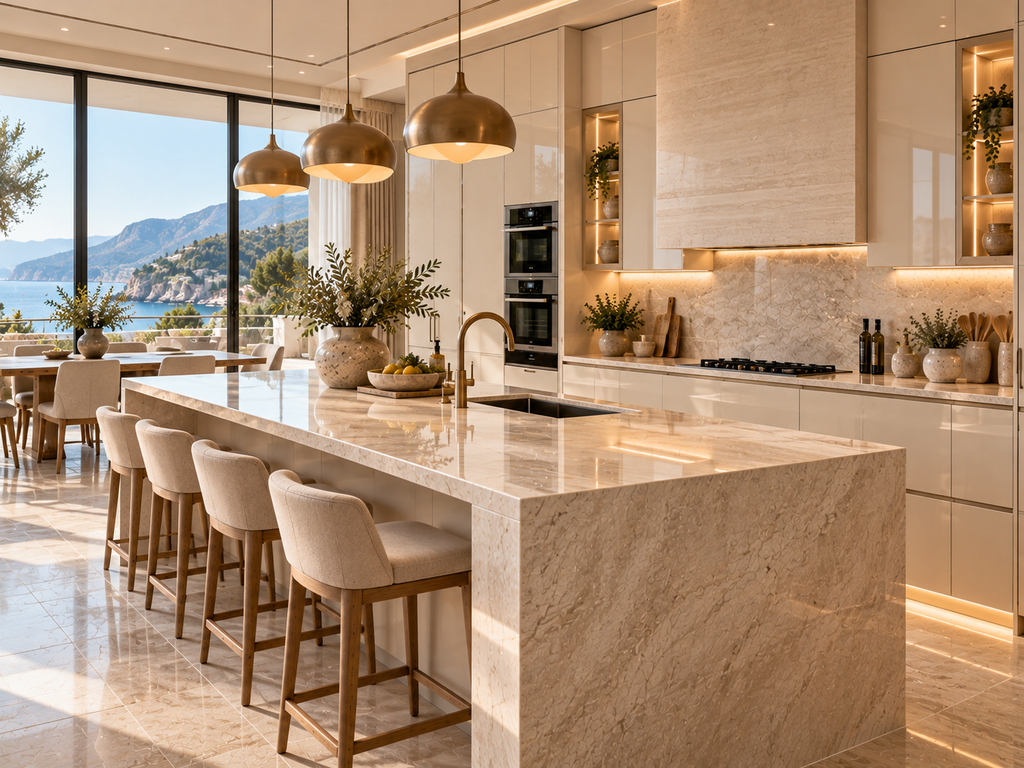
Monaco-inspired kitchens evoke the polished interiors associated with upscale Mediterranean residences. Reflective surfaces, elegant lighting, and carefully coordinated finishes create a sophisticated atmosphere.
High-gloss cabinetry can help reflect light, while polished stone or quartz-look surfaces introduce visual continuity. For a more understated luxury effect, consider satin finishes, warm beige cabinets, and brushed brass or chrome accents.
A large island can become the central feature when space permits. Use pendant lighting to define the island and create a focal point, while integrated appliances help preserve a streamlined appearance.
Luxury does not depend entirely on expensive materials. Good proportions, uncluttered countertops, well-designed storage, and consistent lighting can make a kitchen feel refined even when the budget is limited.
How to recreate the look: Select one or two premium-looking finishes and combine them with simple cabinetry and practical storage.
15. Polish-Inspired Kitchens with Handcrafted Details
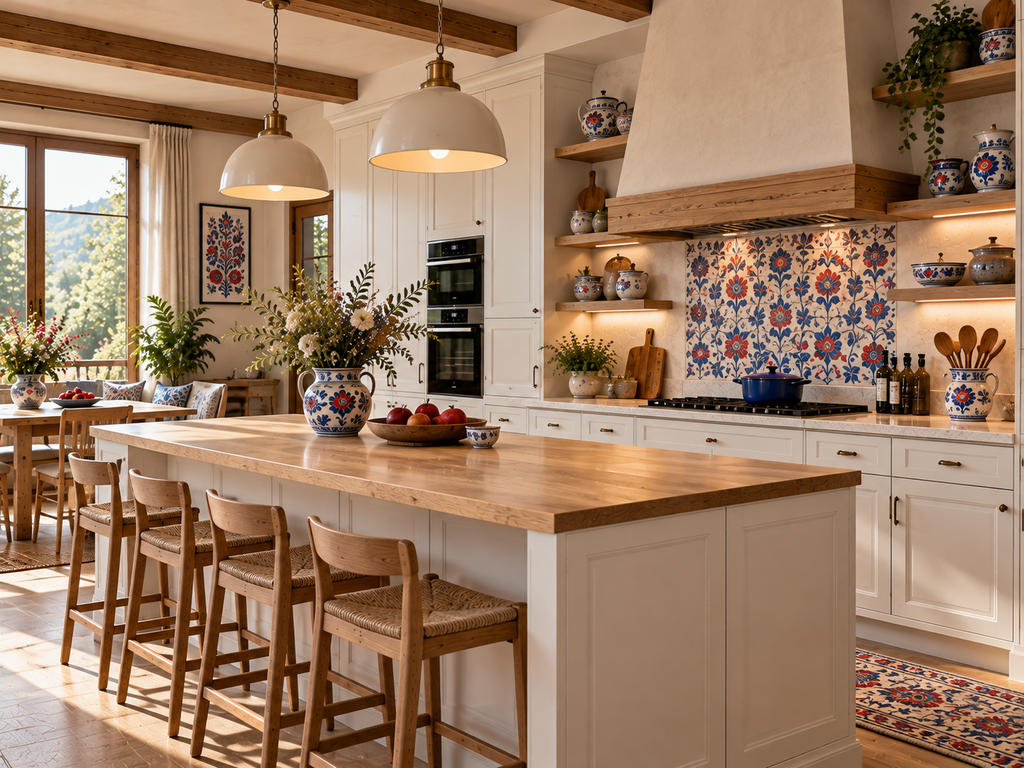
Polish-inspired kitchens can combine traditional folk-art influences with contemporary cabinetry and functional layouts. Decorative motifs, rich wood tones, and colorful ceramics can bring individuality to an otherwise simple kitchen.
A neutral foundation makes it easier to incorporate distinctive details. White or pale gray cabinets can be paired with wooden countertops, patterned tiles, or hand-painted ceramic accessories.
For a stronger traditional influence, use folk-inspired patterns in a backsplash or a small decorative area. This creates a focal point while allowing the remaining surfaces to stay visually calm.
Modern appliances, efficient drawers, and durable worktops ensure that the kitchen remains practical. The result can feel personal and welcoming without sacrificing everyday functionality.
How to recreate the look: Choose one handcrafted or folk-inspired element and let it stand out against a simple, contemporary background.
How to Choose the Right European Kitchen Style
The best European kitchen design is one that suits your space, cooking habits, maintenance preferences, and budget. Before choosing cabinetry or decorative finishes, consider how the kitchen will be used every day.
Consider the size and layout
Small kitchens often benefit from Scandinavian simplicity, German-style storage planning, or a restrained Swiss-inspired layout. Larger rooms can accommodate statement islands, expansive stone countertops, and more elaborate Mediterranean details.
Select a practical color palette
White, cream, beige, and pale gray provide versatile foundations. Sage green, deep blue, terracotta, and walnut introduce stronger character. Choose colors in relation to natural light, flooring, adjacent rooms, and the size of the kitchen.
Compare countertop materials
Natural marble offers distinctive veining but generally requires more care than many engineered alternatives. Quartz surfaces vary by product, and porcelain, granite, and other materials have their own performance and maintenance considerations. Review the manufacturer’s specifications before making a decision.
Plan storage before decoration
Measure your cookware, pantry items, appliances, and everyday essentials. Then decide where drawers, tall cabinets, pull-out organizers, and open shelves will be most useful. Good storage can improve the kitchen experience regardless of which European style you choose.
Layer the lighting
Combine ambient lighting for the room with task lighting over work surfaces. Add pendant or decorative lighting where it improves both function and appearance. Select suitable fixtures for their intended location and installation requirements.
Balance style with budget
You do not need to renovate the entire kitchen to create a European-inspired interior. Updating cabinet hardware, changing a backsplash, introducing wood accents, improving lighting, or repainting suitable cabinets can transform the appearance at a lower cost than a full remodel.
Final Thoughts
European kitchen ideas offer a wide range of design possibilities, from the relaxed warmth of French country interiors to the clean geometry of German kitchens and the earthy character of Spanish Mediterranean spaces.
The most successful design is not necessarily the most expensive or elaborate. It is the one that combines a cohesive visual style with durable materials, useful storage, comfortable lighting, and a layout that supports everyday life.
Choose the elements that best reflect your home and lifestyle, then build the design around them. A thoughtful combination of color, texture, cabinetry, and lighting can create a European-inspired kitchen that remains attractive and practical for years to come.


