

Green is one of the most versatile colors for bedroom design, bringing a sense of freshness, warmth, and visual balance to a personal space. From soft sage green walls to rich emerald accents and earthy olive tones, green bedroom aesthetics can suit almost any interior style. Whether you love modern minimalism, cozy cottage decor, botanical themes, or luxurious interiors, the right shade of green can help you create a bedroom that feels both beautiful and relaxing.
The best green bedroom ideas combine complementary colors, comfortable textures, thoughtful lighting, and furniture that suits the size of the room. You do not need to repaint every wall or replace all your furniture to achieve the look. Small changes, such as green bedding, leafy artwork, natural wood accessories, or decorative cushions, can introduce this refreshing color into your existing space.
If you are planning a bedroom makeover, these 14 green bedroom aesthetic ideas will help you find inspiration for creating a comfortable, cohesive, and stylish retreat.
1. Create a Soft and Serene Sage Green Bedroom

Sage green is an excellent choice for anyone who wants a bedroom that feels peaceful, understated, and effortlessly elegant. Its muted appearance makes it easy to combine with warm neutrals, natural materials, and soft fabrics without overwhelming the room.
For a timeless look, paint the walls sage green and introduce cream bedding, light oak furniture, and beige curtains. White or ivory sheets can brighten the space, while textured cushions and a knitted throw add warmth. This combination works particularly well in modern, Scandinavian-inspired, and contemporary farmhouse bedrooms.
If you prefer to keep your walls neutral, introduce sage green through the duvet cover, decorative pillows, an upholstered headboard, or framed botanical prints. These smaller accents can create a coordinated green bedroom aesthetic without requiring a major renovation.
Consider the natural light in your room before choosing a paint color. Sage shades can appear warmer or cooler depending on the lighting and surrounding finishes, so testing a sample on the wall is a useful first step.
Styling tip: Pair sage green with warm white and natural wood for a soft, inviting appearance. Add black or brushed brass details sparingly if you want a more contemporary finish.
2. Design a Luxurious Emerald Green Bedroom
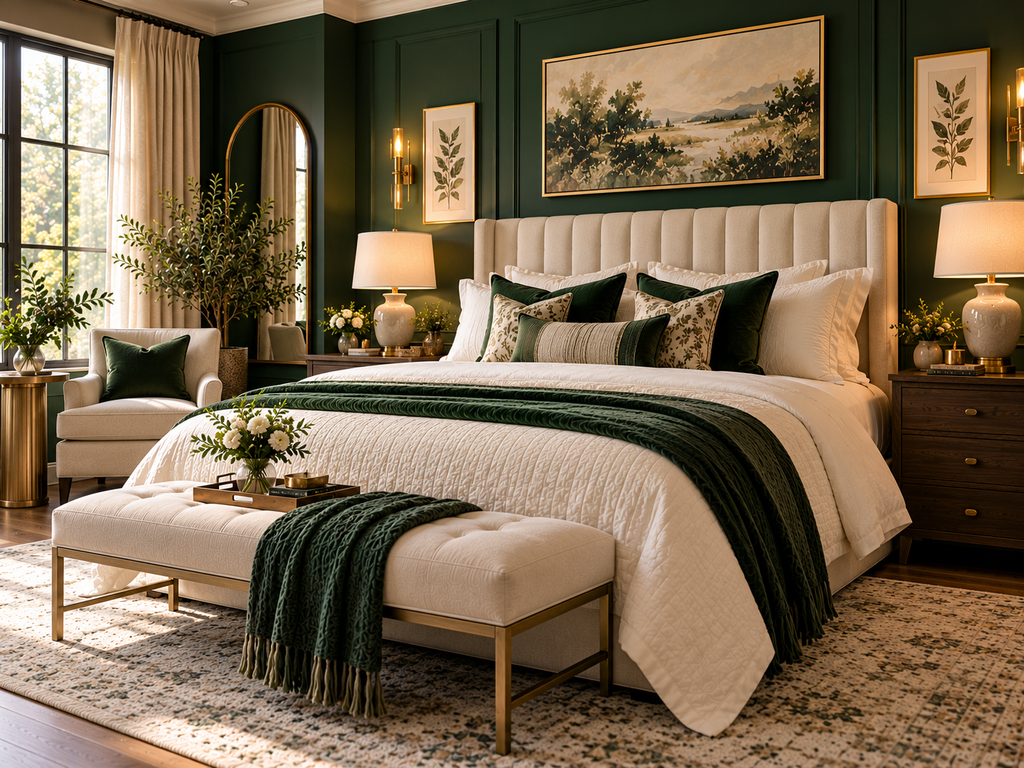
Emerald green brings richness, depth, and sophistication to a bedroom. Unlike softer green shades, this jewel tone creates a dramatic visual statement that works particularly well with elegant furniture, layered textiles, and warm metallic accents.
One effective approach is to use emerald green behind the bed as a feature wall. Pair it with a cream or beige upholstered headboard, white bedding, and dark wood nightstands. Brass lamps, decorative mirrors, or subtle gold-colored hardware can introduce a luxurious finish without making the room look overly ornate.
For a more immersive design, consider emerald green walls with complementary bedding and velvet cushions. Balance the deeper color with lighter fabrics, adequate lighting, and a few reflective surfaces to prevent the space from feeling too heavy.
Emerald green can also work beautifully in smaller doses. A velvet accent chair, upholstered bench, or pair of cushions can introduce richness while allowing the rest of the bedroom to remain light and airy.
Styling tip: Use emerald green as the dominant statement color and balance it with cream, warm white, or natural wood. This contrast helps the room feel elegant rather than visually crowded.
3. Combine Olive Green with Natural Wood
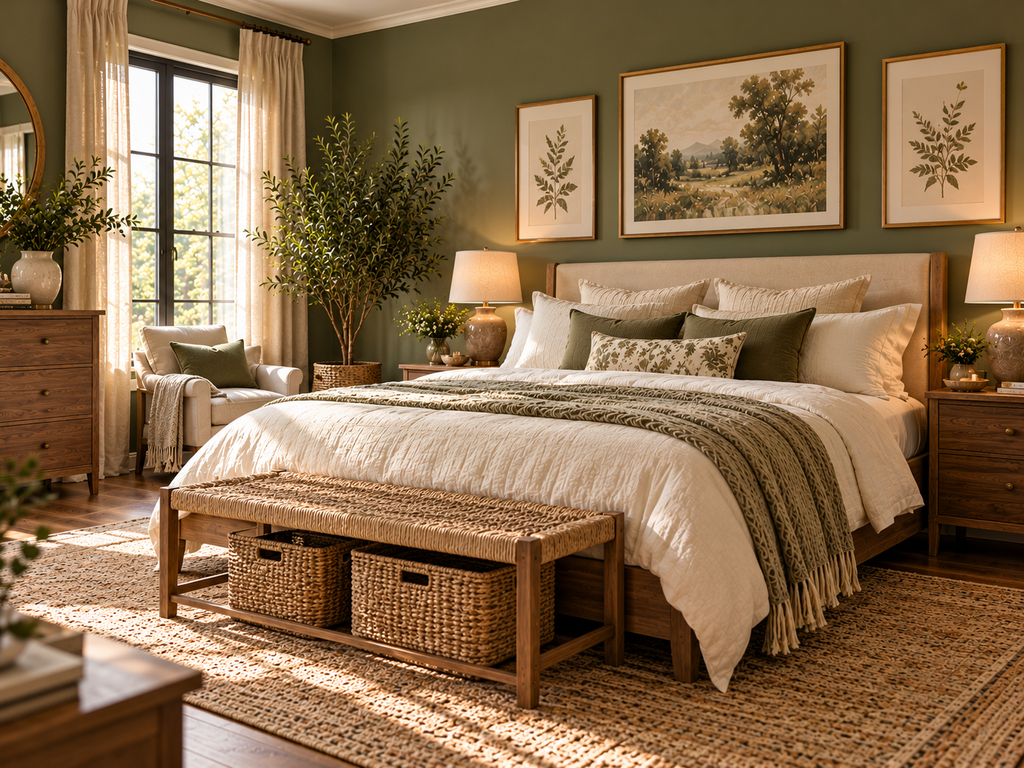
Olive green creates an earthy, grounded atmosphere that pairs beautifully with natural wood furniture and organic materials. Its muted yellow-green undertones make it particularly suitable for bedrooms inspired by nature, rustic interiors, and modern organic design.
Start with olive green walls or a statement headboard, then add oak or walnut furniture to introduce warmth. Cream bedding, linen curtains, woven baskets, and a natural-fiber rug can soften the overall look. These materials create contrast without relying on bright colors or excessive decoration.
For a subtle approach, keep the walls warm white and use olive green in the bedding, cushions, or artwork. This allows the wood finishes to remain prominent while introducing a gentle connection to nature.
Olive green is also a useful choice for rooms that need a more mature and sophisticated color scheme. It works well with terracotta, warm beige, muted mustard, and charcoal accents when these colors are used thoughtfully.
Styling tip: Choose one dominant wood finish and repeat it in two or three places, such as the bed frame, nightstands, and picture frames. This creates visual consistency throughout the bedroom.
4. Try a Green and Cream Bedroom Color Scheme
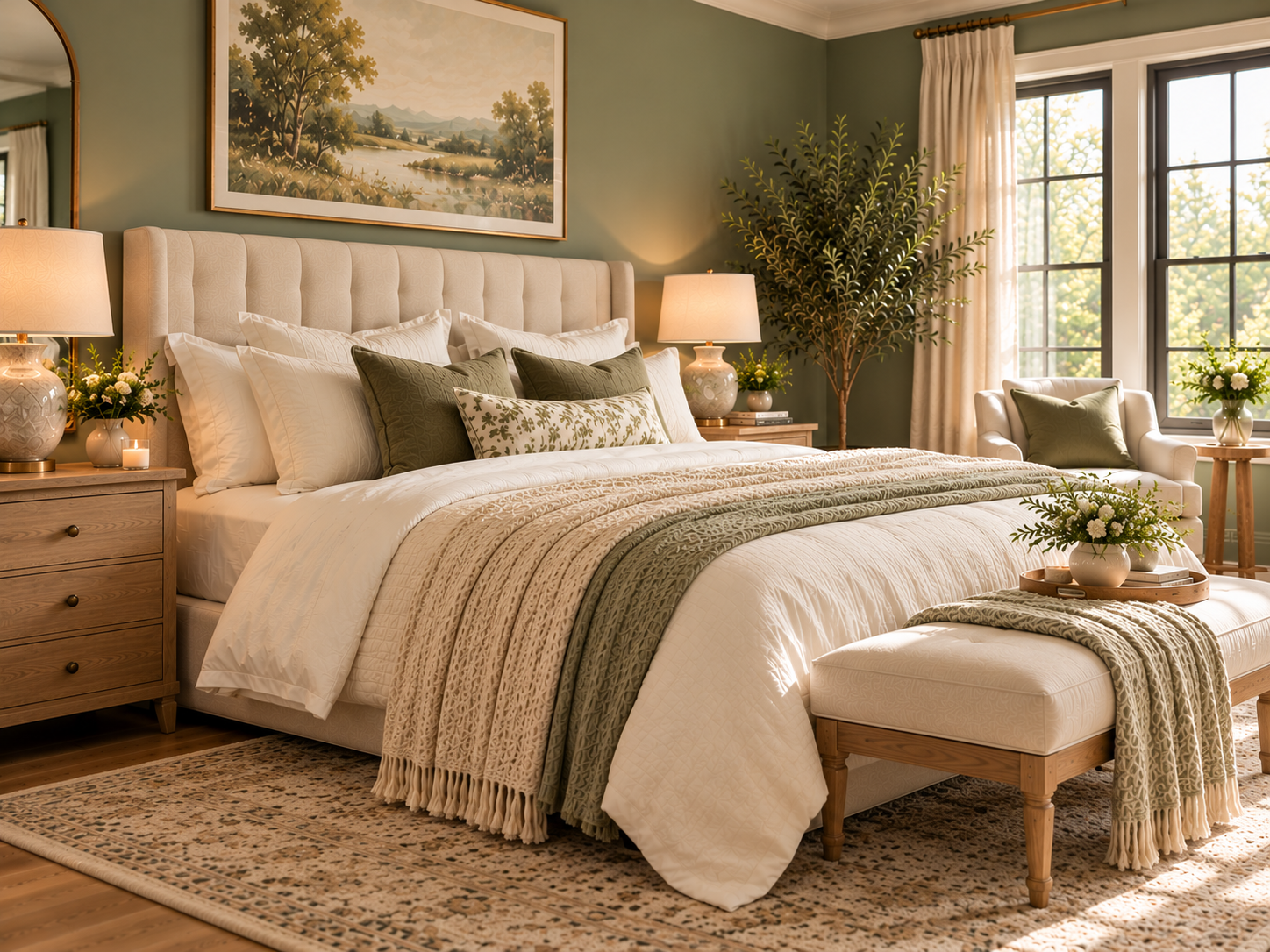
Green and cream make a versatile combination for a bedroom that feels fresh, warm, and sophisticated. Cream softens the visual impact of green, while green adds depth and personality to a neutral interior.
You can create this look by painting the walls a muted green and choosing cream bedding, or by keeping the walls ivory and introducing green through the duvet cover, curtains, and accent pillows. Both approaches work well, depending on the room’s size, lighting, and existing furniture.
For additional depth, incorporate different textures rather than introducing too many new colors. A cream knitted throw, a green velvet cushion, linen curtains, and pale wood furniture can make the room feel layered and thoughtfully styled.
This palette is especially suitable for people who want a green bedroom without committing to a dark or dramatic color scheme. It can also transition easily between seasons by changing small accessories.
Styling tip: Use cream as the balancing color and repeat your chosen shade of green in at least two elements. This helps the bedroom feel coordinated without requiring every item to match.
5. Bring Nature Indoors with Botanical Bedroom Decor

A botanical bedroom aesthetic uses plants, leafy patterns, and natural textures to create a visual connection with the outdoors. It is a great option for anyone who enjoys greenery but prefers a more decorative and layered look.
Begin with a neutral or light green backdrop, then introduce botanical prints through framed artwork, cushions, bedding, or wallpaper. Leaf patterns can be subtle and understated or bold and tropical, depending on your preferred style.
Live plants add natural shapes and color to the room. Place suitable varieties near windows or other locations where their light requirements can be met. Hanging planters, small tabletop plants, and a larger floor plant can create variation without filling every corner.
Natural wood, woven baskets, linen curtains, and jute-style rugs can strengthen the botanical theme. If your bedroom has limited natural light or you prefer low-maintenance decor, botanical artwork and high-quality artificial plants can provide a similar visual effect.
Styling tip: Combine one prominent botanical element with a few smaller accents. Too many competing leaf patterns can make the room feel busy rather than relaxing.
6. Create a Cozy Forest Green Bedroom
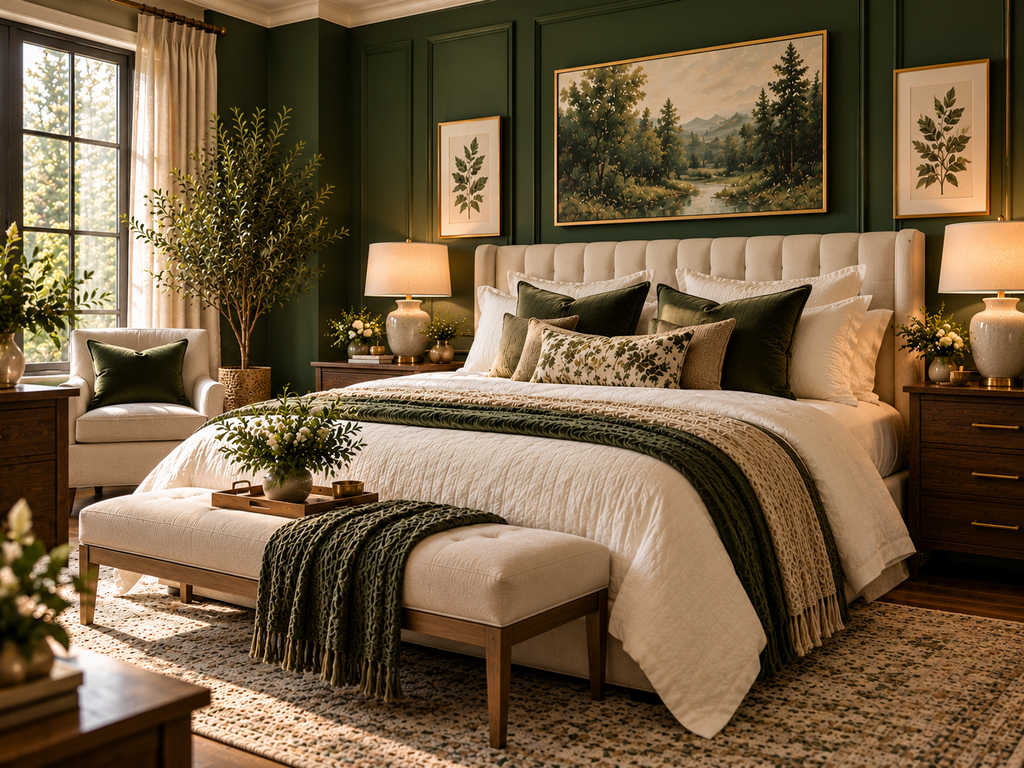
Forest green is a deeper, more atmospheric shade that can make a bedroom feel intimate, grounded, and inviting. It is particularly effective for people who prefer rich colors and want an alternative to conventional beige or white interiors.
Consider using forest green on the wall behind the bed, paired with warm white bedding and medium-toned wood furniture. Soft lamps, layered curtains, and textured blankets can prevent the deeper shade from feeling flat. For a more dramatic look, incorporate dark green bedding and complementary artwork while keeping some larger surfaces light.
Lighting plays an important role in this design. A room with limited daylight may benefit from using forest green on one wall rather than throughout the entire space. In a larger, brighter bedroom, deeper green can be used more extensively if the furniture and lighting maintain a comfortable balance.
Materials such as velvet, brushed cotton, wool, and wood complement forest green particularly well because they add tactile depth to the rich color.
Styling tip: Balance forest green with warm neutrals and layered lighting. The contrast creates a cozy atmosphere while preserving enough visual brightness for everyday use.
7. Choose Green Bedding for an Easy Bedroom Refresh
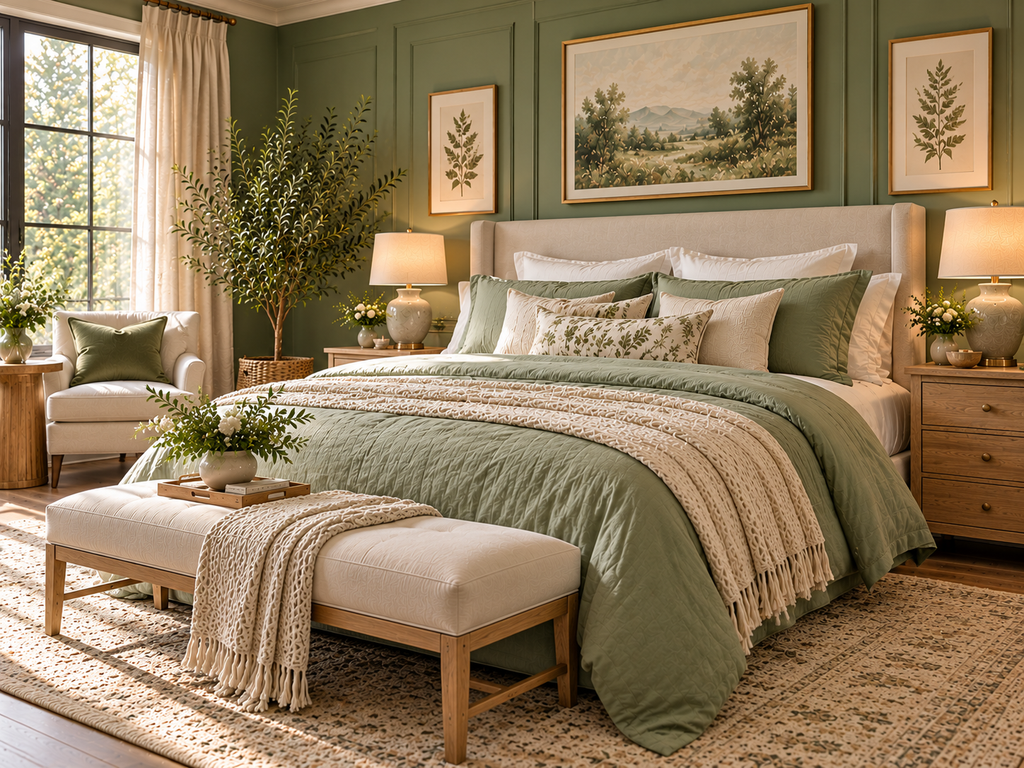
You do not need to repaint your walls or purchase new furniture to create a green bedroom aesthetic. Green bedding is one of the simplest ways to introduce the color while keeping your decorating options flexible.
A sage green duvet cover can create a soft, calming look, while olive green bedding offers an earthy and understated feel. Emerald green can bring a richer, more dramatic effect, particularly when paired with cream sheets and a neutral headboard.
Layering helps make the bed look complete. Start with comfortable sheets, add a duvet or comforter, and finish with a few coordinating cushions and a textured throw. Different fabrics can introduce interest even when the bedding uses only one or two colors.
If your bedroom already contains patterned wallpaper or colorful furniture, choose solid green bedding to avoid visual competition. Alternatively, subtle botanical patterns can work well in an otherwise neutral room.
Styling tip: Select bedding in a shade that complements your existing wall color and furniture. Repeating green in a small accessory, such as a cushion or artwork, will help tie the design together.
8. Add Green Wallpaper for a Stylish Feature Wall
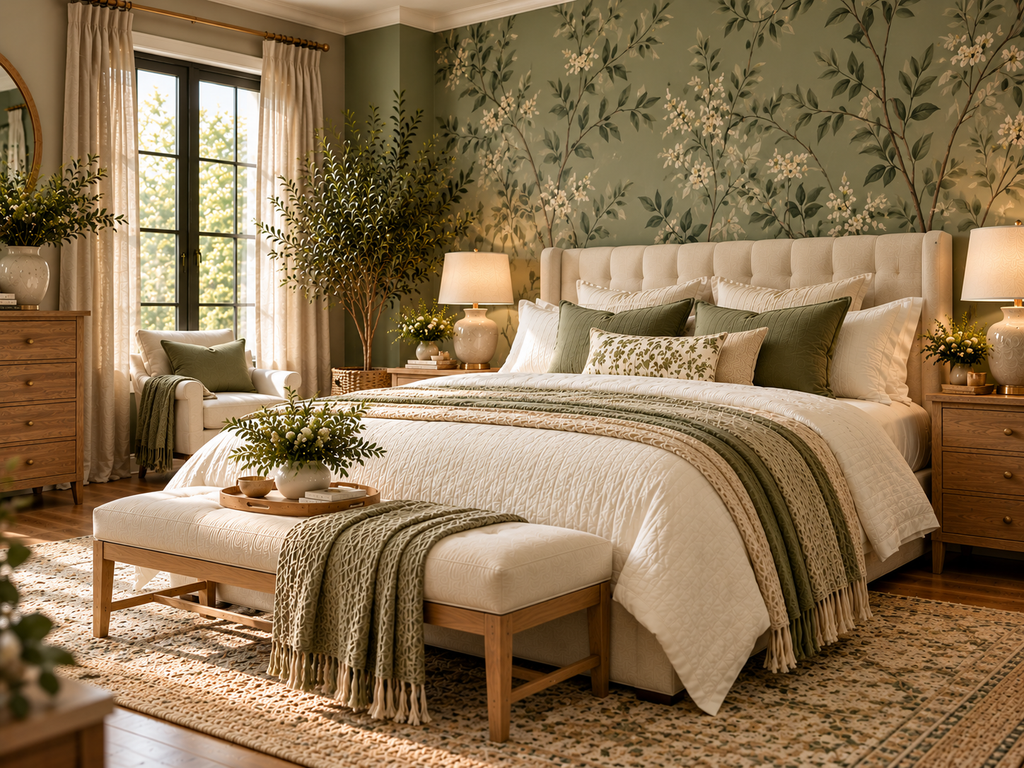
Green wallpaper can introduce pattern, texture, and personality to a bedroom without requiring additional decorative accessories. It is especially effective when used behind the bed, where it creates a focal point and helps define the sleeping area.
For a subtle look, consider sage green wallpaper with delicate botanical illustrations, understated geometric shapes, or a textured linen-like finish. If you prefer a bolder design, oversized leaves or a mural inspired by a forest can create a more dramatic statement.
When choosing wallpaper, consider the size and pattern scale. Small, delicate patterns often work well in traditional or cottage-inspired bedrooms, while larger botanical designs can suit contemporary spaces. If the wallpaper is visually busy, keep the bedding and surrounding furniture relatively simple.
Removable wallpaper may be a practical option for renters or anyone who wants to change their decor without committing to a permanent finish. Always check the product’s installation and removal requirements before use.
Styling tip: Use the wallpaper as the main decorative feature and coordinate the bedding with one or two colors from the pattern. This creates a polished look without making the room feel overcrowded.
9. Design a Modern Minimalist Green Bedroom

A minimalist green bedroom focuses on clean lines, useful furniture, uncluttered surfaces, and a carefully limited color palette. This style is ideal if you want a contemporary bedroom that feels organized without appearing cold or impersonal.
Start with one shade of green, such as muted sage or soft eucalyptus, and combine it with warm white walls, simple bedding, and natural wood furniture. Choose a streamlined bed frame, compact nightstands, and practical storage that keeps everyday belongings out of sight.
Decorative accessories should be selected carefully. A single piece of abstract artwork, a sculptural bedside lamp, or a small plant can add personality without compromising the minimalist appearance.
Texture is particularly important in a restrained design. Linen bedding, a wool-style rug, and subtle wood grain prevent the room from feeling flat while keeping the overall arrangement simple.
Styling tip: Prioritize a few high-impact elements instead of filling the bedroom with decorative objects. A cohesive color scheme and functional furniture will do most of the work.
10. Combine Green with Warm Pink Accents
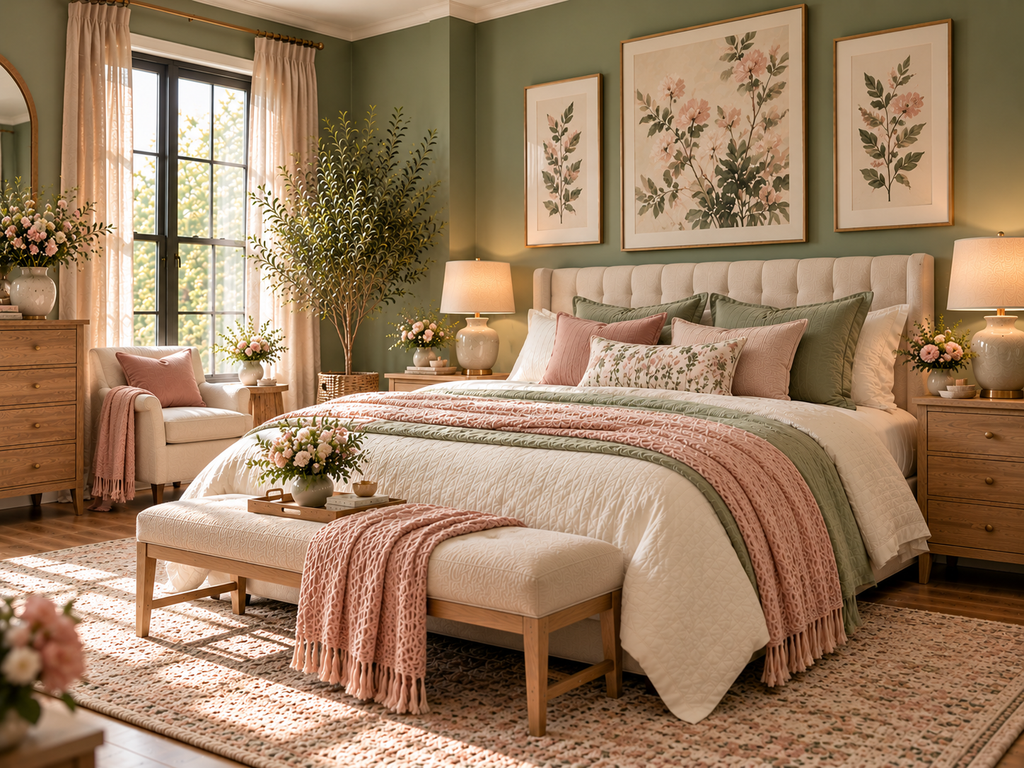
Green and pink can create a balanced bedroom palette that feels fresh, expressive, and gently feminine. The contrast between green’s earthy character and pink’s softer appearance allows both colors to stand out without requiring an elaborate design.
For a subtle combination, use sage green walls with dusty pink cushions, a blush throw, and cream bedding. If you prefer a more colorful room, introduce muted rose through curtains, artwork, or an upholstered accent chair.
Keep the shades coordinated. Soft sage tends to pair naturally with dusty rose and blush, while deeper olive can work with muted terracotta-pink tones. Emerald green can create a richer contrast when paired with restrained blush accents and warm metallic details.
Avoid introducing too many competing shades at once. Cream, beige, or warm white can act as a visual bridge between the two colors.
Styling tip: Let green occupy the larger surfaces and use pink in smaller decorative elements. This keeps the palette balanced and makes it easy to update the look later.
11. Style a Small Green Bedroom to Feel More Open
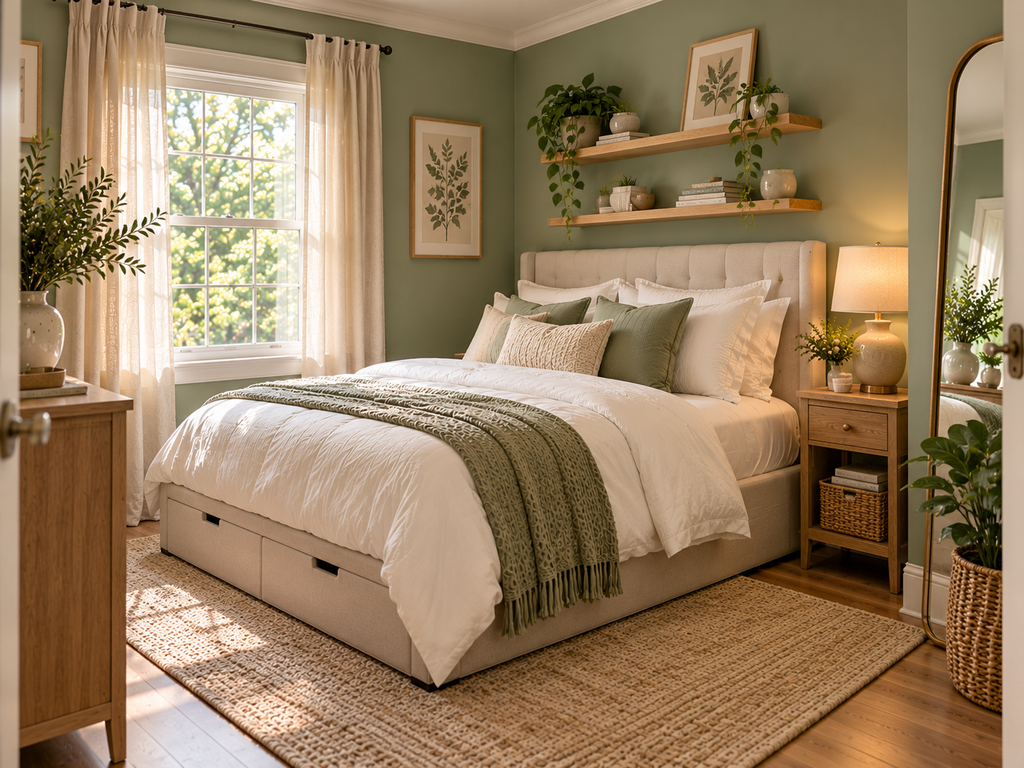
Green can work beautifully in a small bedroom when the shade, furniture, and lighting are chosen thoughtfully. Rather than avoiding color completely, use it strategically to create a room that feels inviting without appearing crowded.
Light sage, pale eucalyptus, and muted green-gray shades can be good starting points, particularly when combined with warm white bedding and light-colored furniture. If you prefer a darker green, consider limiting it to the wall behind the bed or using it in accessories.
Space-saving furniture can make a meaningful difference. Choose compact nightstands, wall-mounted shelves, and a bed with integrated storage if additional space is needed. Keep pathways clear and avoid adding oversized decorative furniture that makes movement difficult.
Mirrors can help reflect light and create a greater sense of visual depth when placed thoughtfully. Sheer curtains can also allow daylight into the room while providing privacy when paired with suitable window coverings.
Styling tip: Use green as a coordinated accent rather than introducing many unrelated colors. A limited palette helps a small bedroom feel more cohesive.
12. Add Natural Textures for a Green Organic Bedroom
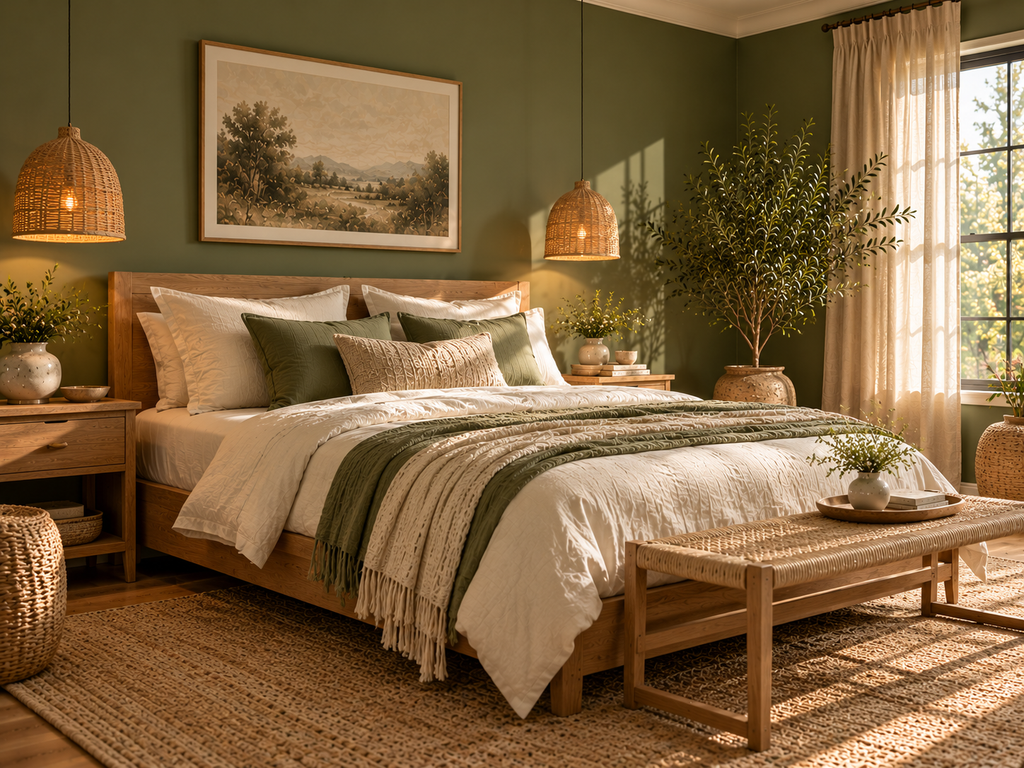
An organic green bedroom combines nature-inspired colors with materials that add warmth and tactile interest. This style feels relaxed and contemporary, making it a strong choice for anyone who enjoys understated decor and natural finishes.
Start with a muted green wall or a few green textiles, then introduce wood, linen, cotton, woven fibers, and ceramic accessories. A wooden bed frame, linen curtains, a textured rug, and a handmade-looking vase can make the room feel layered without relying on excessive decoration.
The goal is to create a connection between the color palette and the materials. Olive green and walnut can produce a rich, earthy appearance, while sage green and pale oak feel lighter and more contemporary.
Plants can complement the design, but they are not essential. Natural wood grain, botanical artwork, and woven decor can achieve an organic aesthetic even when live plants are not practical.
Styling tip: Choose a few natural materials and repeat them throughout the room. Consistency in wood finishes and textile textures makes the overall design feel intentional.
13. Create a Green Cottagecore Bedroom
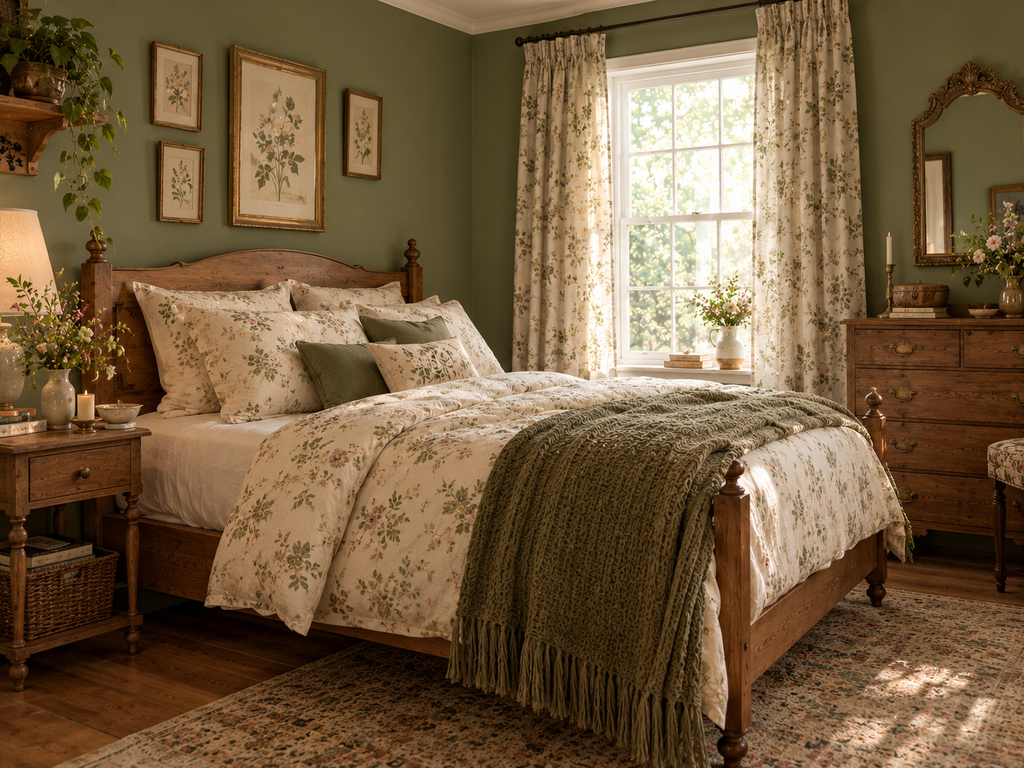
A cottagecore bedroom combines nature-inspired colors, floral details, vintage-style furniture, and soft textiles to create a charming and welcoming space. Green works particularly well with this aesthetic because it complements botanical prints and traditional materials.
Choose sage, moss, or muted olive green for the walls, then add floral bedding, delicate curtains, and a wooden or vintage-inspired bed frame. An antique-style mirror, a small bedside table, or framed botanical illustrations can introduce character.
Layered textiles help complete the look. A lightweight quilt, a knitted throw, and cushions in coordinating colors create a comfortable appearance without requiring perfectly matching patterns. For a more contemporary interpretation, keep the furniture simple and use floral details selectively.
This style does not require an old farmhouse or expensive antique furniture. Secondhand finds, floral artwork, and natural fabrics can help create the same feeling in an ordinary apartment or modern home.
Styling tip: Combine one floral pattern with solid green and cream textiles. This keeps the room charming and layered without making the design feel overly busy.
14. Make a Statement with Green Velvet and Elegant Details

Green velvet is an effective way to introduce depth and luxury into a bedroom without changing the entire color scheme. Its soft surface catches the light differently from cotton and linen, adding visual richness to furniture and accessories.
An emerald or deep olive velvet headboard can become the focal point of a neutral bedroom. Pair it with cream bedding, warm wood furniture, and understated brass or champagne-colored details. If you already have a neutral bed, velvet cushions, a bench, or an accent chair can introduce a similar effect on a smaller budget.
Balance is important when working with rich fabrics. Too many heavy textiles and dark surfaces can make a bedroom feel visually dense, so combine velvet with lighter materials and allow some areas to remain simple.
This approach works particularly well in modern classic, boutique-hotel-inspired, and sophisticated contemporary interiors.
Styling tip: Choose one main velvet element and let the remaining fabrics provide contrast. Cream linen, cotton bedding, and natural wood can soften the richness of green velvet.
How to Choose the Best Green Shade for Your Bedroom
The right shade of green depends on the atmosphere you want to create, the natural light in your room, and the colors of your existing furniture.
| Green shade | Best aesthetic | Colors to pair it with |
|---|---|---|
| Sage green | Calm, soft, contemporary | Cream, beige, pale oak |
| Emerald green | Luxurious, dramatic | Ivory, walnut, brass |
| Olive green | Earthy, organic | Warm white, terracotta, wood |
| Forest green | Cozy, moody, sophisticated | Cream, taupe, dark wood |
| Eucalyptus green | Fresh, minimalist | White, light oak, soft gray |
| Moss green | Natural, cottage-inspired | Floral prints, cream, vintage wood |
Before committing to a wall color, test a paint sample in different parts of the room. Observe it during daylight and in the evening, because both the lighting and neighboring colors can change how the shade appears.


